
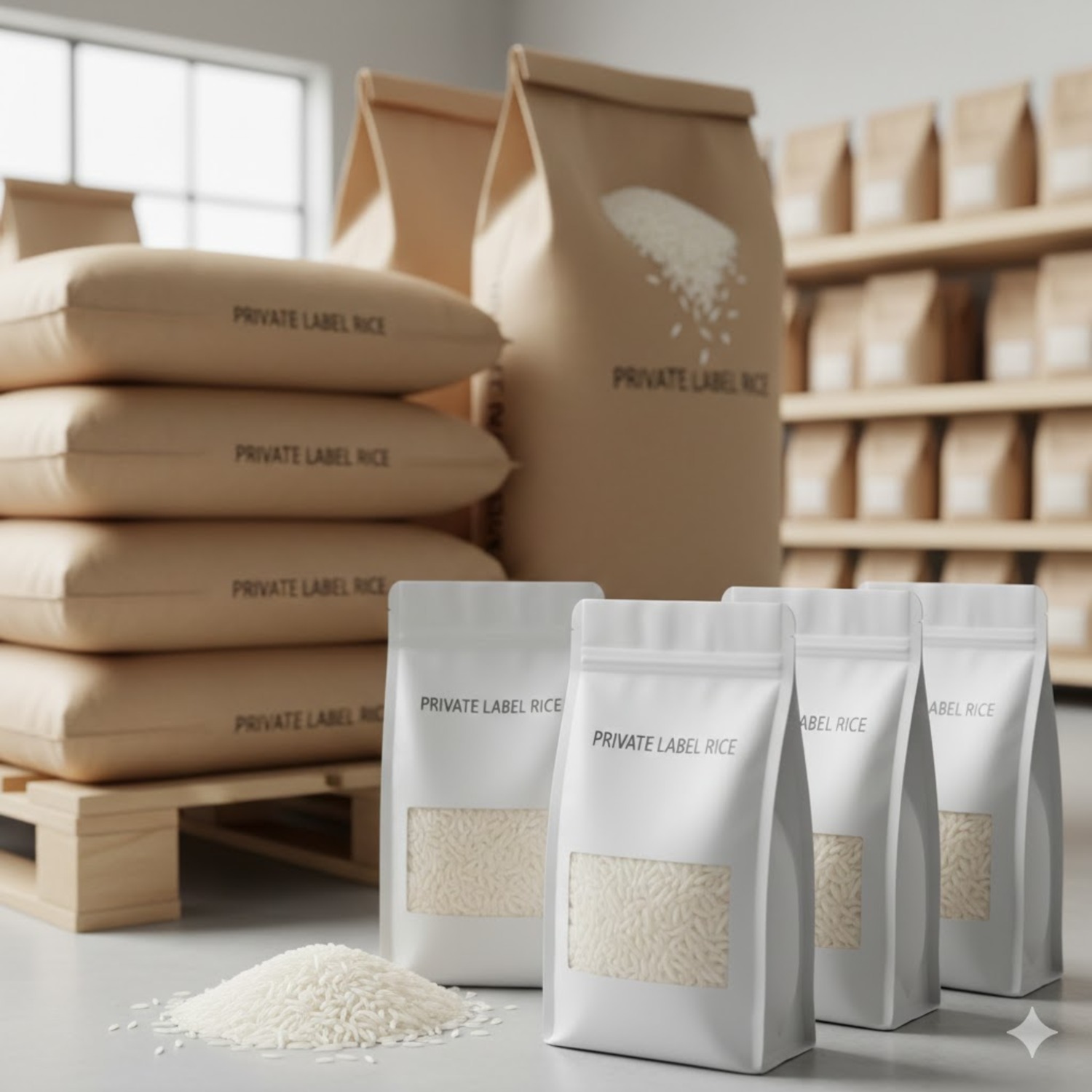
Explore how private label rice brands are changing the trade. Learn about rice private labeling and global rice branding trends. Private label products have quietly taken over grocery shelves, and rice is no exception. Across large global markets, a shift is happening. Retailers, importers, and wholesalers are moving away from big-name brands and turning to their own labels instead.
This shift isn’t just about packaging; it’s about control, quality, trust, and better profit margins. Private label rice brands are becoming the smarter choice for both sellers and buyers. As global demand for rice grows, so does the opportunity for companies to build something with their own name. Let’s take a closer look at what’s driving this trend, how rice private labeling works, and why it’s changing the game in international rice trade.
Why Private Labels Are Gaining Popularity
There was a time when only top-tier brands ruled the rice market. These brands spent huge amounts on ads, packaging, and brand image. But currently, consumers are also changing. Many of them care more about quality and price than logos.
Retailers have noticed. They realized they could cut out the big brands and sell high-quality rice under their own names. That gave birth to the rise of private-label rice brands. The demand isn’t just growing in local markets, it’s becoming a strong part of global rice branding trends.
How Rice Private Labeling Works
Here’s how it usually goes:
- A retailer or distributor finds a reliable rice supplier.
- They work out product specs: grain type, quality level, moisture content, etc.
- The supplier mills, cleans, and packs the rice often under the buyer’s brand name.
- The product is delivered ready to sell, looking just like any big brand on the shelf.
In simple terms, rice private labeling lets businesses skip the farming and production part, while still offering their own product. Such a setup works well for both sides. Buyers get complete control over branding and pricing. Sellers move large volumes without managing marketing or retail distribution.
Global Rice Branding Trends Point to Control
Control is a big reason private labels are booming. Retailers no longer want to rely on brands they can’t influence. With private labels, they decide how the product looks, feels, and performs.
They can change packaging anytime. Adjust price points as needed. Even shift suppliers without losing their customer base. This level of flexibility is rare with big-name brands. And in a competitive market, it’s a serious edge.
Retailers that manage their own rice labels also build customer loyalty. Shoppers trust stores that offer consistent quality at fair prices. That trust keeps them coming back.
Private Labels Help Cut Costs
Big brands carry high costs. Think advertising, middlemen, and huge overheads. All that adds to the price customers pay. With private labels, much of that is gone. The rice comes straight from the supplier to the retailer. No middle steps. No flashy ad campaigns.
This lean model lets sellers price their products lower and still make better margins. It also lets buyers get quality rice at a more affordable rate. That’s a big reason private label rice brands are growing faster in price-sensitive regions. Customers want value, and stores want better control over their supply chain.
Packaging and Presentation Now Match Big Brands
In the past, private labels looked plain. But that’s changed. Today’s private label packaging is sharp, clean, and shelf-ready. Retailers work with designers to create attractive bags that stand out. Many use resealable pouches, eco-friendly materials, and vibrant branding. In short, private labels don’t “look cheap” anymore.
Suppliers are keeping up, too. They invest in machines that meet international standards. The result? A polished product that feels just as premium as the biggest brands. So it’s no surprise that private labels are now winning space on shelves even in high-end stores.
Quality Is No Longer a Question
One of the biggest changes in global rice branding trends is how buyers view quality. It’s no longer assumed that a big brand means better rice. Private labels now offer premium long grain, parboiled, Basmati, and specialty varieties often backed by lab tests and certifications.
In fact, many top suppliers treat private label orders with higher standards because they know repeat deals depend on quality. That trust drives the model. So when a retailer puts their name on a bag of rice, they take it seriously. And the supplier makes sure it holds up.
What Buyers Should Look For in a Supplier
To build a strong private label rice brand, finding the right supplier is key. Look for:
- Consistency in quality
- Strong packaging capabilities
- Flexible MOQs (minimum order quantities)
- Transparent communication
- On-time delivery
Reliable suppliers offer full service: milling, grading, cleaning, packing, and labeling. Some even offer help with designs or market insights. That kind of support can make or break a private label launch.
Choose a Supplier Who Knows the Market
Want to build a private label that lasts? Work with a trading company that understands what buyers need from quality rice to great packaging. Meskay & Femtee supports global buyers with full-service rice supply and private labeling options.
Conclusion
Private label brands are reshaping the global rice trade. Retailers want more control and better margins. Trusted producers who meet demand and quality standards now have more chances to grow.
FAQs
1: What is private labeling in rice trading?
A: Private labeling means selling rice under a custom brand name, created by a retailer or distributor, not the producer.
2: Why are private-label rice brands growing?
A: They give retailers more control, better margins, and strong customer loyalty, all without compromising quality.
3: Do private label products match branded rice in quality?
A: Yes. Many match or exceed branded quality, with full control over specs and packaging.
4: Is private labeling only for big businesses?
A: No. Even small buyers can start private labels, especially if they partner with flexible suppliers.
5: Where is private labeling growing the most?
A: Regions like the Middle East, Africa, and Europe are seeing fast growth in private rice brands.
Leave a Reply