
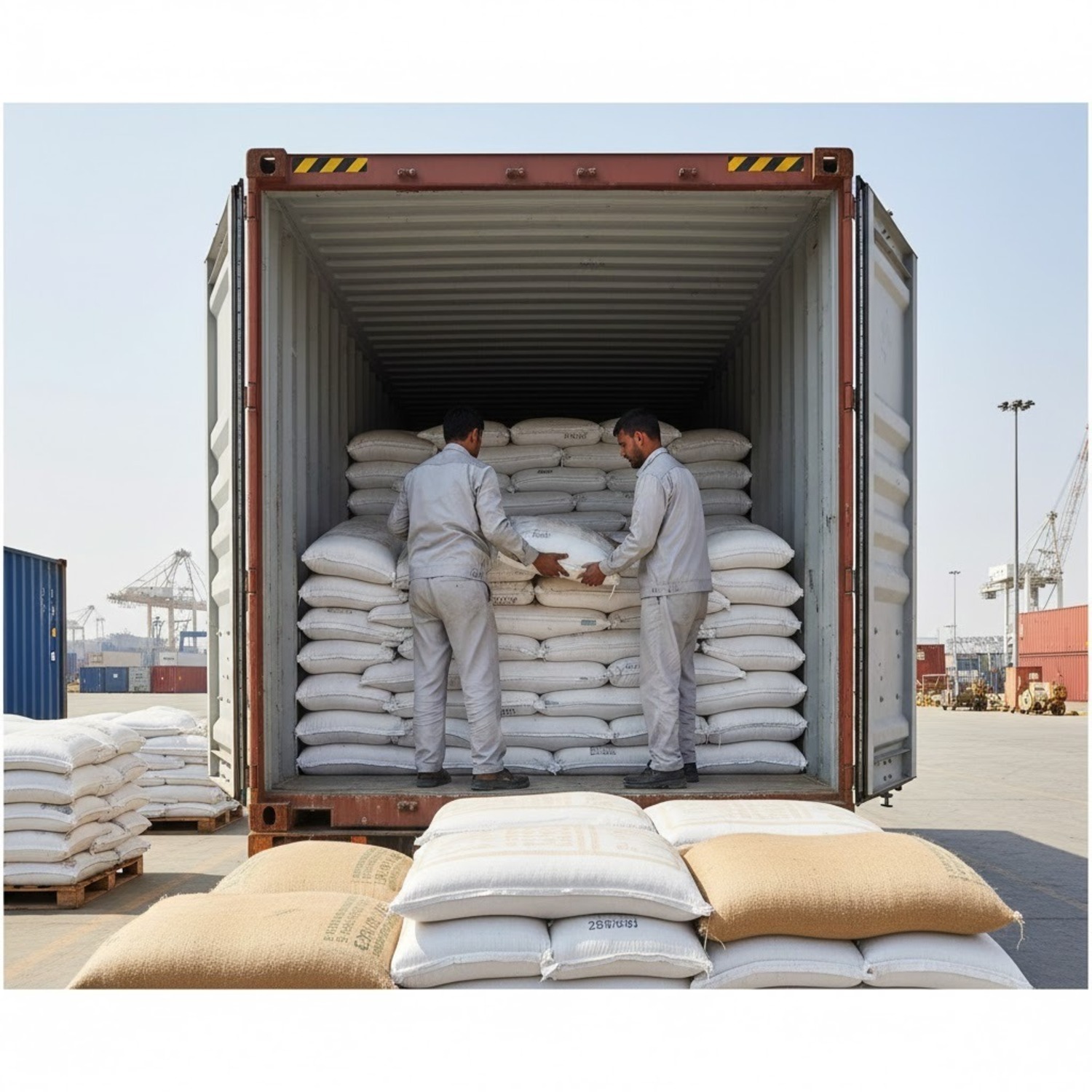
Pakistan is currently experiencing a rice export boom, with Basmati and IRRI varieties reaching markets from the EU to East Africa. However, growing premium rice is only half the battle. The real challenge, and where profit margins are often won or lost, lies in rice export logistics.
Unlike general dry cargo (like textiles or plastic goods), rice is a “living” organic commodity. It breathes, releases moisture, and is sensitive to temperature changes. A general freight guide might tell you how to book a container, but it won’t tell you how to prevent your cargo from turning into a mouldy block by the time it reaches the destination.
At Meskay & Femtee Trading Company (MFTC), we have mastered the art of moving grain across oceans. Below, we break down the critical freight forwarding tips for bulk rice shipments that most generic guides miss.
1. The “Heavy Tested” 20ft Container Strategy
Many new exporters make the mistake of focusing on volume rather than weight.
- The Competitor Gap: Most guides suggest standard 20ft containers.
- The Pro Tip: Rice is dense. A standard 20ft container often hits its weight limit before it is full. Always request “Heavy Tested” 20ft containers from your freight forwarder.
- Why? A standard container handles ~21 tons. A heavy-tested unit can handle up to 27-28 tons.
- The Benefit: By maximising the payload per container, you significantly reduce your freight cost per metric ton (PMT), giving you a competitive pricing edge over exporters shipping lighter loads.
2. Combatting “Container Rain” (Moisture Control)
One of the biggest risks in rice freight forwarding is moisture damage, specifically “Container Rain” (or Cargo Sweat).
- The Science: When a ship travels from a warm climate (Karachi) to a cooler destination (like Europe in winter), the temperature drop causes moisture in the air to condense on the container ceiling. This water drips down onto the rice bags, causing mould.
- The Solution: Do not rely solely on the container’s ventilation.
- Desiccants: Use high-absorption Calcium Chloride poles or bags (at least 1.5kg – 2kg per container).
- Kraft Paper Lining: Line the walls and, crucially, cover the top of the stacked bags with Kraft paper or cardboard. This acts as a sponge, catching the “rain” before it touches the rice.
3. Direct vs. Transhipment Routes
In logistics, the cheapest rate is often a trap.
- The Risk: A cheaper freight rate usually involves transhipment (changing vessels) at hubs like Salalah, Singapore, or Jebel Ali.
- The Rice Factor: Every day your rice sits in a metal container under the scorching sun at a transhipment port, the internal temperature rises, “cooking” the grain and increasing the risk of weevil infestation.
- MFTC Advice: For premium Basmati shipments, prioritise Direct Vessels or routes with minimal layover times. Paying $50 extra for a direct route can save you thousands in quality claims later.
4. Negotiating “Free Days” at Destination
This is a logistical detail often overlooked until it’s too late.
- The Problem: Standard shipping lines offer 5-7 days of “free time” (demurrage-free days) at the destination port.
- The Reality: Food inspections at destinations like the USA (FDA) or the EU often take longer than 7 days. Once free time expires, you are charged daily detention fees ($100+ per day).
- The Fix: Before booking, negotiate for 14 to 21 Free Days at the destination. Experienced rice freight forwarders know which shipping lines offer this concession for agricultural commodities.
5. Documentation: The Phyto-Bill of Lading Sync
In bulk rice shipments, documentation errors are costly.
- Critical Check: Your Bill of Lading (BL) weight must match your Phytosanitary Certificate weight down to the kilogram.
- Why? Customs authorities in importing countries use the Phytosanitary certificate to clear the health aspect of the cargo. If the BL says “25,000 kg” and the Phyto says “25,050 kg”, the shipment can be held, triggering fines and delays. Always ensure your clearing agent drafts the BL based on the final weighbridge slip, not the Proforma Invoice.
6. The 40ft Container Myth
Clients often ask, “Why not use a 40ft container to ship more?”
- The Fact: You generally cannot use 40ft containers for bulk rice.
- The Reason: A 40ft container has a weight limit similar to a 20ft container (approx. 26-28 tons). Since rice is dense, you would reach the weight limit with the container only half full. You would be paying for double the space (ocean freight) but shipping the same amount of rice. Stick to 20ft Heavy Tested units.
Conclusion: Logistics is Part of the Product
At Meskay & Femtee Trading Company, we believe that rice export logistics isn’t just about moving a box; it’s about preserving the harvest’s integrity. Whether you are shipping Super Kernel Basmati or IRRI-6, the right packaging, container selection, and route planning are what ensure your rice arrives as fresh as it left the mill.
Need a reliable partner for your next rice consignment? We handle the complexities of freight so you don’t have to.
Contact MFTC Today for a quote that includes smart logistics planning.
FAQs
1. What is the best Incoterm for rice exports?
A: CFR (Cost and Freight) is popular as it allows the exporter to control the choice of shipping line and ensure quality handling. However, FOB (Free on Board) is common if the buyer has their own freight contracts.
2. How many bags of rice fit in a 20ft container?
A: It depends on the packing size. For 25kg bags, you can typically fit 1,000 to 1,080 bags (25 to 27 Metric Tons) in a heavy-tested 20ft container.
3. Do I need to fumigate the container?
A: Yes. Fumigation is mandatory for all rice exports to kill pests. It is usually done after the container is stuffed and the doors are closed, using Methyl Bromide or Phosphine, depending on the destination country’s regulations.
Leave a Reply