
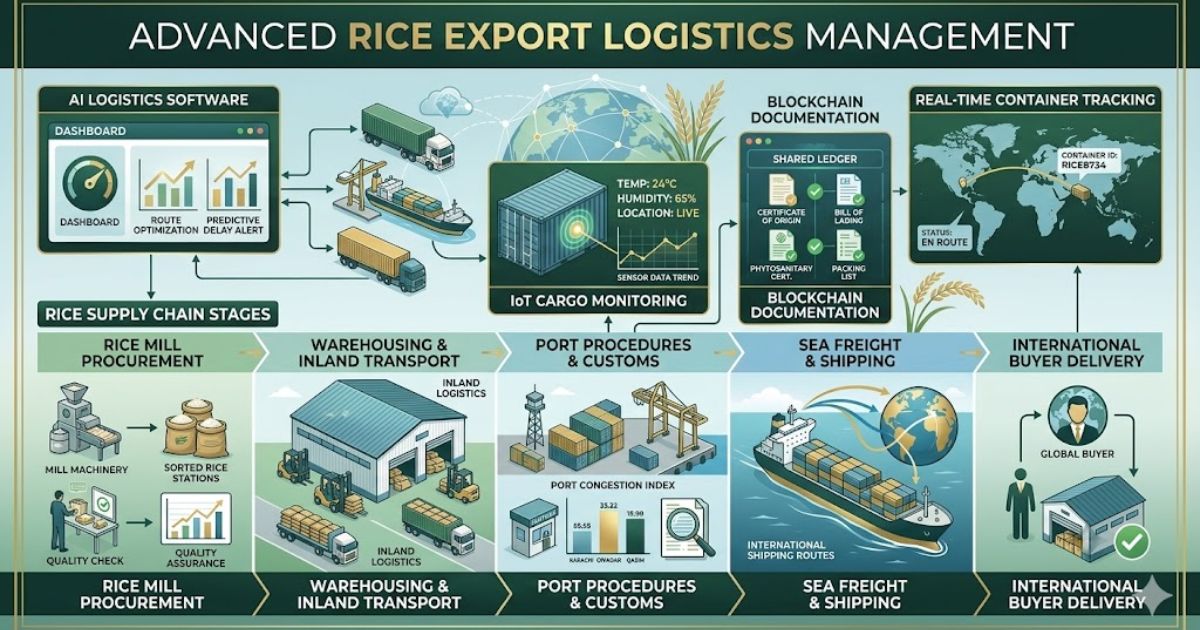
Rice export logistics in the global rice trade need a strict balance between agricultural readiness and complex maritime schedules. For rice exporters in Pakistan, overcoming uncertain rice export logistics issues is very important to maintain profitability and reputation.
Common Shipping Delays Faced by Rice Exporters
Managing an efficient rice export supply chain requires navigating unpredictable global shipping networks. Understanding these frequent disruptions helps rice exporters in Pakistan safeguard their cargo and delivery timelines.
Severe Port Congestion
High-volume harvest seasons frequently overwhelm terminal berths, delaying vessel docking and cargo offloading.
Acute Container Shortages
Global trade imbalances often limit the availability of food-grade, moisture-free containers at regional export hubs.
Vessel Space Constraints
High market demand can lead to container roll-overs, where shipping lines bump cargo to later transit dates.
Customs Documentation Errors
Mistakes in phytosanitary certificates, bills of lading, or origin paperwork trigger immediate regulatory holds.
Unpredictable Route Disruptions
Geopolitical issues, canal closures, and intense weather force lengthy carrier diversions that stall global deliveries.
Unpredictable global disruptions need proactive logistics management for preserving grain quality and securing international buyers.
How Rice Exporters Handle Supply Chain Disruptions
Global trade routes face constant friction from port strikes, equipment shortages, and shifting border laws. To maintain steady delivery schedules, proactive rice exporters build flexible operational strategies.
- Market and Corridor Diversification
- Digital Trade Facilitation
- Integrated End-to-End Supply Chains
This complete operational control is exactly how industry leaders like Meskay & Femtee Trading Company (MFTC) keep shipments moving without delays.
How Weather Conditions Affect Rice Export Logistics
- Severe Monsoon Flooding: Heavy seasonal rains wash out roads.
- Extreme Humidity Spikes: High heat creates moisture inside containers.
- Delayed Crop Harvests: Erratic rainy seasons delay mill processing.
- Sudden Port Closures: Severe coastal storms halt terminal cranes.
Using weatherproof storage and flexible shipping routes protects supply chains from sudden climate shocks. These steps prevent unexpected weather from ruining cargo or stalling deliveries.
Best Practices for Smooth Rice Export Operations
Maintaining an efficient global footprint requires structural discipline across the entire supply chain. Implementing strict operational standards saves the grain value and prevents severe border bottlenecks.
1. Rigorous Quality Control
Exporters must audit moisture levels constantly before sealing containers. This strict checking prevents destructive mould outbreaks during long sea transits. It guarantees the grain arrives in perfect condition.
2. Advanced Protective Packaging
Firms should utilize multi-layer laminated barrier bags for bulk shipments. This advanced packaging blocks external humidity and stubborn cargo pests. It preserves the shelf life of premium rice variants.
3. Automated Document Auditing
Exporters must verify phytosanitary paperwork digitally well before the vessel cuts off. Early digital checks eliminate unexpected customs clearance holds at destination ports. This
automation keeps shipments moving without administrative delays.
4. End-to-End Tracking
Logistics teams need to deploy smart IoT container sensors. These devices monitor cargo transit conditions, location, and temperature live. Real-time data allows exporters to handle transit disruptions immediately.
Standardizing these proactive measures guarantees consistent global delivery and secures long-term buyer trust.
Future Trends in Rice Export Shipping and Logistics
The global rice export supply chain is undergoing a rapid digital and environmental transformation.
- Smart IoT Cargo Tracking
- Blockchain Documentation Systems
- Eco-Friendly Green Shipping
- AI-Driven Route Optimization
- Automated Port Terminals
Adopting these digital tools keeps modern rice exports fast, safe, and highly profitable.
Technologies Used to Manage Rice Export Logistics
Why Reliable Logistics Matter in the Rice Export Business
A seamless supply chain is the backbone of successful international grain trading. Because rice is a high-volume, moisture-sensitive product, any sudden spike can directly hurt product quality and business revenue.
- Preserves Grain Quality: Rapid shipping prevents moisture buildup and mold.
- Eliminates Costly Fees: On-time deliveries avoid expensive port penalties.
- Secures Buyer Trust: Consistent schedules build strong buyer relationships.
- Maximizes Profit Margins: Streamlined transport lowers overall operational costs.
Top exporters like Meskay & Femtee Trading Company (MFTC) utilize efficient logistics to ship the product directly from the mill to the destination port.
Conclusion
Mastering the rice export supply chain requires balancing mill readiness with maritime schedules. Overcoming rice export logistics issues depends on strict administrative audits and diversified transport lanes. Companies that build resilient freight networks, protect their global rice trade reputation, and secure stable profit margins.
Simplify Your Rice Export Supply Chain
FAQs
What causes shipping delays in rice exports?
Port congestion, container shortages, and customs paperwork errors cause frequent rice shipping delays. Severe weather and sudden shipping route changes also stall bulk rice movements.
How do rice exporters handle logistics challenges?
Exporters audit all shipping paperwork 48 hours before port cutoffs. They track vessels digitally in real time. Moving cargo across multiple shipping lines also avoids single-point failures.
What are common rice export supply chain issues?
Common issues include volatile ocean freight rates, freight capacity constraints, and unexpected container rollovers. Inland trucking delays due to high fuel costs also disrupt schedules.
How can exporters reduce shipment delays?
Exporters minimize the delays by automating compliance documents and syncing mill stuffing with actual vessel arrival windows. Partnering with a single integrated provider like MFTC simplifies the entire process.
Why is logistics management important in rice exports?
Rice spoils easily from high moisture and long transit delays. Efficient logistics management protects grain quality from mold. It avoids costly port demurrage fees and maintains long-term buyer trust.
Leave a Reply