
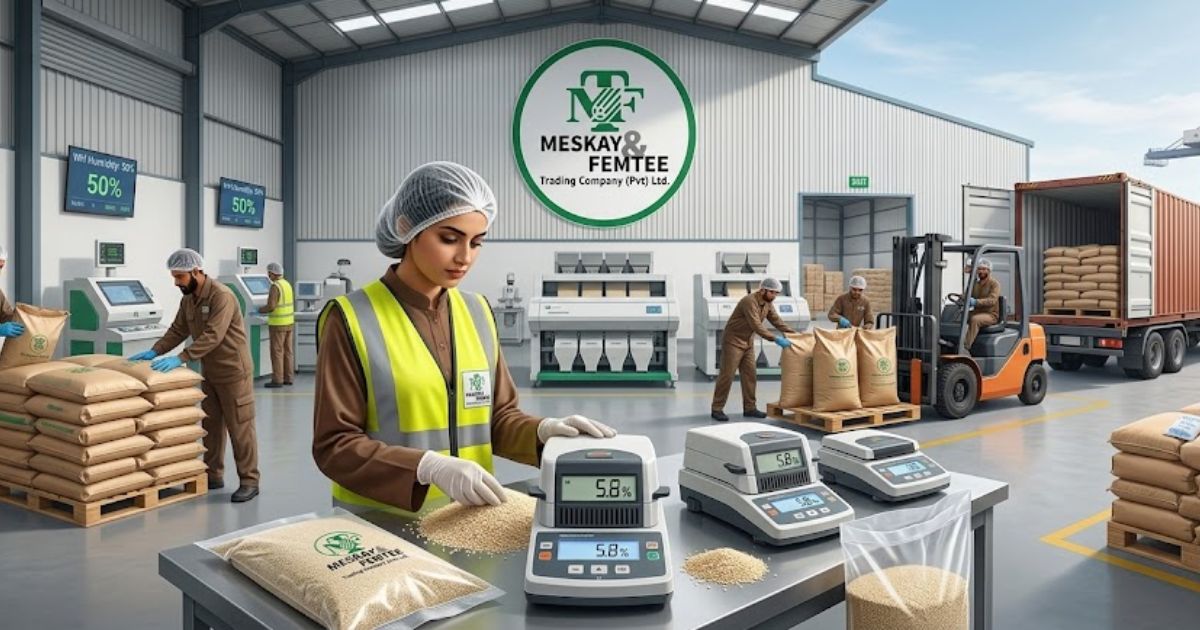
Sesame seed moisture control dictates the success of bulk sesame export shipments. Keeping water levels low during long-distance transit is the top priority for global suppliers. Skipping moisture control ruins shipments early. It destroys quality. It triggers massive financial losses.
Things to Consider Before Buying Guar Gum Products
Moisture management prevents sesame seed contamination. It protects global shipments.
High humidity ruins seed quality. It breeds bacteria. Proper drying ensures safe transit. It maintains product value.
- Prevents Rancidity: Low water levels stop oils from turning bitter.
- Blocks Mould: Dry conditions halt hazardous fungal and bacterial growth.
- Avoids Clumping: Loose seeds will not jam food processing machinery.
- Preserves Colour: Proper drying keeps the sesame storage conditions looking clean.
- Meets Standards: Keeping moisture under 6% ensures export compliance.
Dependable exporters like Meskay & Femtee Trading Company (Pvt) Ltd ensure your cargo matches strict international quality standards.
Common Causes of Excess Moisture in Sesame Seeds
Moisture control is an essential factor in protecting sesame seed quality. Even small amounts of trapped water can ruin complete shipments during transit.
Inadequate Post-Harvest Drying
Rushing the drying process traps water inside the seeds. Not going for the proper dehumidification leads to rapid spoilage.
Immature Harvesting
Early harvesting ruins crops. Pods must dry naturally. They need to open in the field. This moisture spoils the final yield. Always wait for natural drying.
Humid Warehouse Conditions
Storing bulk seeds in poorly ventilated facilities allows them to absorb moisture directly from the humid ambient air.
Ground Condensation
Stacking seed bags directly on concrete warehouse floors without pallet elevation causes moisture to seep upward into the cargo.
Container Sweat
Ocean transit has big temperature swings. This creates condensation on container ceilings. Water drips directly onto the cargo.
How Exporters Maintain Sesame Seed Quality Standards
Exporters protect quality from harvest to shipping. They use a strict multi-step process. This process secures the Pakistan sesame export market. It guarantees premium standards for global buyers.
Step 1: Immediate Post-Harvest Drying
Seeds are spread out for sun-drying or processed through mechanical dehumidifiers to lower internal moisture safely not above 6%.
Step 2: Multi-Stage Mechanical Cleaning
Exporters pass raw seeds through air-screen separators and gravity tables to eliminate dust, stones, stems, and empty husks.
Step 3: Precision Colour Sorting
Advanced optical colour sorters isolate and remove discoloured, damaged, or immature seeds to ensure uniform visual quality.
Step 4: Palletised Climate Storage
Cleaned seeds are packed into moisture-resistant bags. They are stored on elevated pallets. The warehouses are well-ventilated and humidity-controlled.
Step 5: Protective Export Shipping
Containers are linked with heavy-duty desiccants and moisture-absorbent blankets to prevent container sweat and condensation during ocean transit.
Moisture Levels and Their Impact on Sesame Seed Quality
Maintaining precise moisture levels is the single most critical factor in preserving the colour, taste, and market value of trade-ready sesame seeds.
| Moisture Level | Quality Status | Impact on Export Quality |
|---|---|---|
| Under 5% | Over-Dried | Seeds break easily, lowering oil yields. |
| 5% – 6% | Premium | Ideal shelf life, colour, and international export standard compliance. |
| 6.1% – 8% | At Risk | Can cause bitter oils and mild seed clumping during storage. |
| Above 8% | Spoilage | Triggers rapid mold growth and may lead to export rejection. |
How MFTC Ensures Safe Global Sesame Seed Supply
Meskay & Femtee Trading Company (Pvt) Ltd utilises rigorous quality controls to guarantee safe, premium sesame seed exports worldwide.
- Strictly monitors crop moisture.
- Uses advanced optical sorting.
- Maintains climate-controlled storage.
- Applies food-safe pest treatments.
- Prevents container transit condensation.
Ideal Moisture Standards for Sesame Seed Export
The standard international benchmark for global trade requires a maximum moisture content of 6% for sesame seed exports.
Maintaining this precise threshold provides critical benefits across the entire supply chain:
International Compliance
Keeping moisture at or below 6% is a mandatory legal standard required by premium global import hubs, including the European Union, Japan, and the United States, to pass strict port customs inspections.
Preserving Chemical Stability
Low water limits fat breakdown. This keeps Free Fatty Acids (FFA) under the 2% premium limit. It prevents oils from turning rancid.
Biological Protection
Keeping seeds dry starves harmful microorganisms. This ensures safety. It stops mold, rot, and Salmonella. It keeps the product safe for long global journeys.
Physical Integrity
Properly dried seeds do not clump, sweat, or ferment. They survive multi-week ocean shipments safely. The cargo arrives clean, uniform, and fully processing-ready.
Strict moisture boundaries allow exporters to deliver premium-grade products. This eliminates transit losses. It guarantees long-distance stability for international buyers.
Conclusion
Strict moisture management protects sesame seeds during transit. Even small humidity spikes trigger fungal growth and bitter oils. By keeping moisture low, suppliers prevent massive financial losses. This care ensures safe, premium products for global markets.
FAQs
Why is moisture control important in sesame seed trading?
It preserves shelf life and stops rancidity. It prevents dangerous mold. It protects market value during long ocean shipments.
How does moisture affect sesame seed quality?
High moisture breaks down natural oils into bitter fatty acids. It stains seed colour. It causes clumping that jams processing machinery.
What is the ideal moisture level for sesame seeds?
The standard global benchmark is a maximum moisture content of 6%. This ensures safe long-term storage and international compliance.
How are sesame seeds stored for export?
Bulk sesame suppliers pack seeds in multi-wall or PP bags. They elevate them on pallets away from floor moisture. They come with well-ventilated, climate-controlled warehouses.
How do exporters prevent fungal contamination in sesame seeds?
Exporters use sun drying or industrial dehumidifiers right after harvest. Reducing water levels stops mold growth before packing.
Leave a Reply