
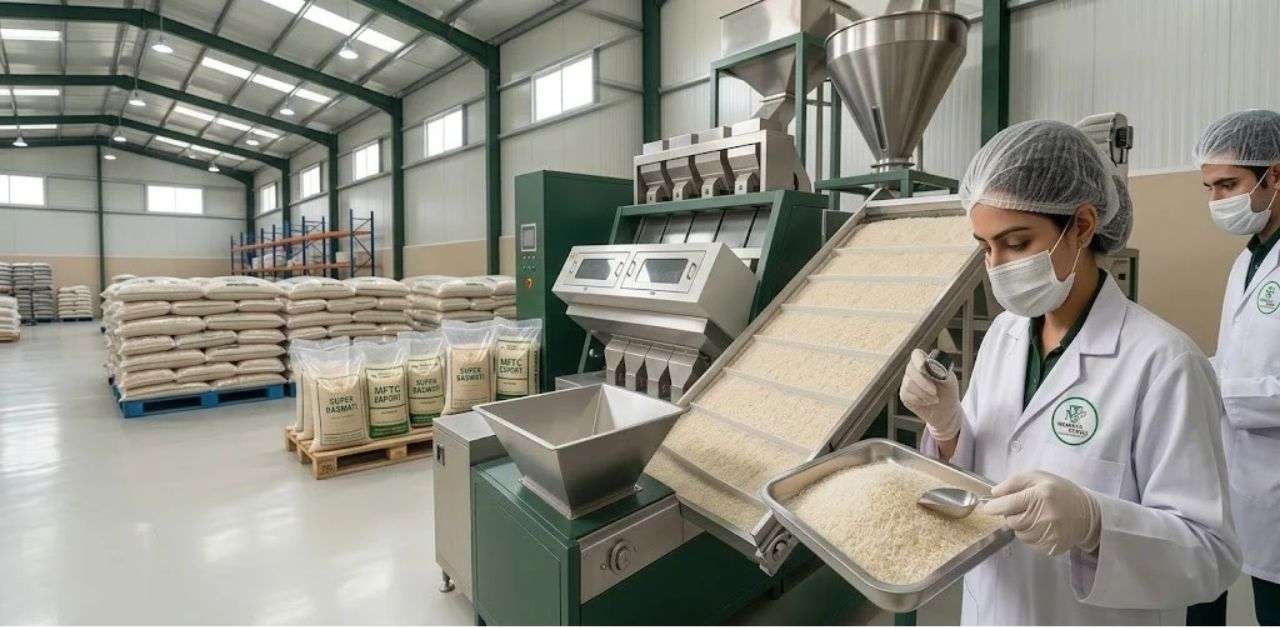
The ultimate decision for the international buyer, importer, and bulk buyer is the quality of the rice mill that supplies the rice. The mill determines whether all shipments arrive clean, consistent, and compliant or if they come with broken grains, inconsistency, and conflicting costs. This Guide tells you what constitutes a quality rice mill and the 7 things you should ask every buyer before agreeing to buy from a rice mill.
What Makes a Quality Rice Mill?
A quality rice mill consistently turns raw paddy into clean, uniform, well graded rice with minimal breakage and full food safety compliance. It combines modern milling equipment, controlled processing at every stage, and rigorous quality checks to deliver a dependable, repeatable result.
The distinction matters because not all mills are equal. A basic mill can produce rice; a quality mill produces the same high standard of rice in every batch, which is precisely what commercial buyers depend on. In practice, a quality rice mill is defined less by a single machine and more by the whole system: sourcing, technology, process control, and consistency working together.
Why the Mill Matters to Buyers
For a B2B buyer, the rice mill is the single biggest factor behind product quality and supply reliability. Everything a buyer cares about, grain consistency, low broken grain percentages, hygiene, and on time volume, is determined at the mill, not after it.
A poorly equipped or inconsistent mill creates real commercial risk: rejected shipments, complaints from downstream customers, and unreliable supply during peak demand. A quality mill removes that risk. This is why experienced buyers evaluate the mill itself, not just a rice sample, before entering a supply agreement.
7 Things Buyers Should Check
Before sourcing from any rice mill, buyers should verify these seven factors. Together, they separate a reliable, quality rice mill from an average one.
| # | Factor | What It Means in Practice |
|---|---|---|
| 1 | Modern Milling Equipment | Multistage machines produce far fewer broken grains than single-stage ones and help retain the grain’s natural quality. Confirm that the mill uses modern, well-maintained equipment. |
| 2 | Processing Capacity | The mill must handle large and repeat orders without delay. Verify daily and seasonal throughput before committing to steady volume. |
| 3 | Quality Control Systems | Consistency is the hallmark of a quality mill. Look for documented checks at every stage, from paddy intake to packaging, that hold each batch to the same specification. |
| 4 | Sorting and Grading Precision | Modern mills use sensors and optical cameras to sort by size, shape, and colour, removing broken and discoloured grains. This helps deliver uniform grain quality. |
| 5 | Certifications | International food safety and quality certifications are essential for many export markets. They help demonstrate that the mill meets applicable standards and can supply regulated markets. |
| 6 | Traceability | A quality mill can trace its rice through the supply chain, which matters for food safety and buyer confidence. Ask about full traceability and proper labelling. |
| 7 | Export Experience | International orders need more than good rice. A mill with real export experience handles documentation, packaging standards, and large-volume logistics reliably. |
How to Spot the Best Rice Mills in Pakistan
Pakistan has many rice mills, but only some meet the standard serious buyers need. Rather than relying on a generic “top 10 rice mills in Pakistan” list, the smartest approach is to judge each mill against the seven factors above, because a real ranking depends entirely on your specific requirements for grade, volume, and market.
The best rice mills share a common trait: they answer a buyer’s questions openly and back their claims with documentation. A mill that transparently shares its certifications, milling technology, and export record is demonstrating the reliability that defines a genuine quality operation, whichever region of Pakistan it operates in.
How to Compare Rice Mills in Pakistan
Pakistan is one of the world’s major rice exporting nations, and its mills range widely in capability. When comparing rice mills in Pakistan, buyers should look beyond price to the seven factors above, and weigh them against their own requirements for volume, grade, and market.
The most reliable comparison comes from evidence, not claims. Buyers should request certifications, ask for milling and capacity details, review grading standards, and confirm export track record. A supplier that answers these openly, with documentation, is signalling the transparency that defines a quality operation. Whether sourcing rice from mills in Karachi or elsewhere in the country, this evidence based approach is what protects a buyer’s supply.
How MFTC Meets These Standards
For buyers seeking a rice mill that meets all seven criteria, Meskay & Femtee Trading Company (MFTC) offers an integrated, export focused operation. As one of Pakistan’s leading rice suppliers, MFTC controls quality across the entire process, from paddy sourcing to packaging.
MFTC meets the standards buyers look for in the following ways:
- Advanced multistage milling that minimises broken grains and preserves grain quality
- High tech sensor and camera sorting for precise, uniform grading by size, shape, and colour
- End to end quality control, with checks from cleaning through to packaging, backed by recognised certifications
- Farm to plate integration, including farmer support and Kubota precision farming, which secures a steady supply of high quality paddy
- Established export experience, supplying rice to markets worldwide with the documentation and volume reliability international buyers require
The result is what every buyer is ultimately looking for: consistent, high quality rice, delivered dependably. To discuss your requirements or request details, contact the MFTC team.
FAQs
1. What should buyers look for in a quality rice mill?
A: Modern milling equipment, sufficient capacity, strong quality control systems, precise sorting and grading, certifications, traceability, and proven export experience.
2. What equipment should a modern rice mill have?
A: Multistage milling machines, polishing systems, and sensor based optical sorting and grading equipment that reduce breakage and ensure uniform grain.
3. How does a rice mill maintain consistent grain quality?
A: Through documented quality checks at every stage, from paddy intake to packaging, combined with precision sorting to remove defective grains.
4. Why is rice milling capacity important for bulk buyers?
A: Because sufficient capacity ensures the mill can fulfil large and repeat orders on time, which is essential for reliable commercial supply.
5. How do buyers compare rice mills in Pakistan?
A: By evaluating equipment, capacity, quality control, grading, certifications, and export record with documentation, rather than comparing on price alone.
6. What quality checks should a rice mill perform before packaging?
A: Cleaning, grading by size and colour, removal of broken and discoloured grains, moisture control, and food safety verification before final packing.
7. How can international buyers choose a reliable rice mill in Pakistan?
A: By verifying certifications, milling technology, capacity, traceability, and export experience, and by choosing a supplier that provides this evidence transparently.