
Pakistan’s agricultural sector holds considerable promise. It drives exports of rice, guar gum, sesame, and other crops. At Meskay & Femtee Trading Company (Pvt.) Ltd., we’ve seen how farming, processing, and mechanisation come together to shape the success of our exports.
Our work with tractors, implements, and especially the authorised import of Kubota agricultural machinery helps Pakistani farmers raise yield and quality.
Trends in Pakistan’s Agricultural Exports
Several patterns mark recent growth:
- Rice remains the leading crop with annual exports of $3.2 billion during the last fiscal year.
- Guar gum and its derivatives have gained global demand. Pakistan now serves food-grade, pharmaceutical, and industrial markets.
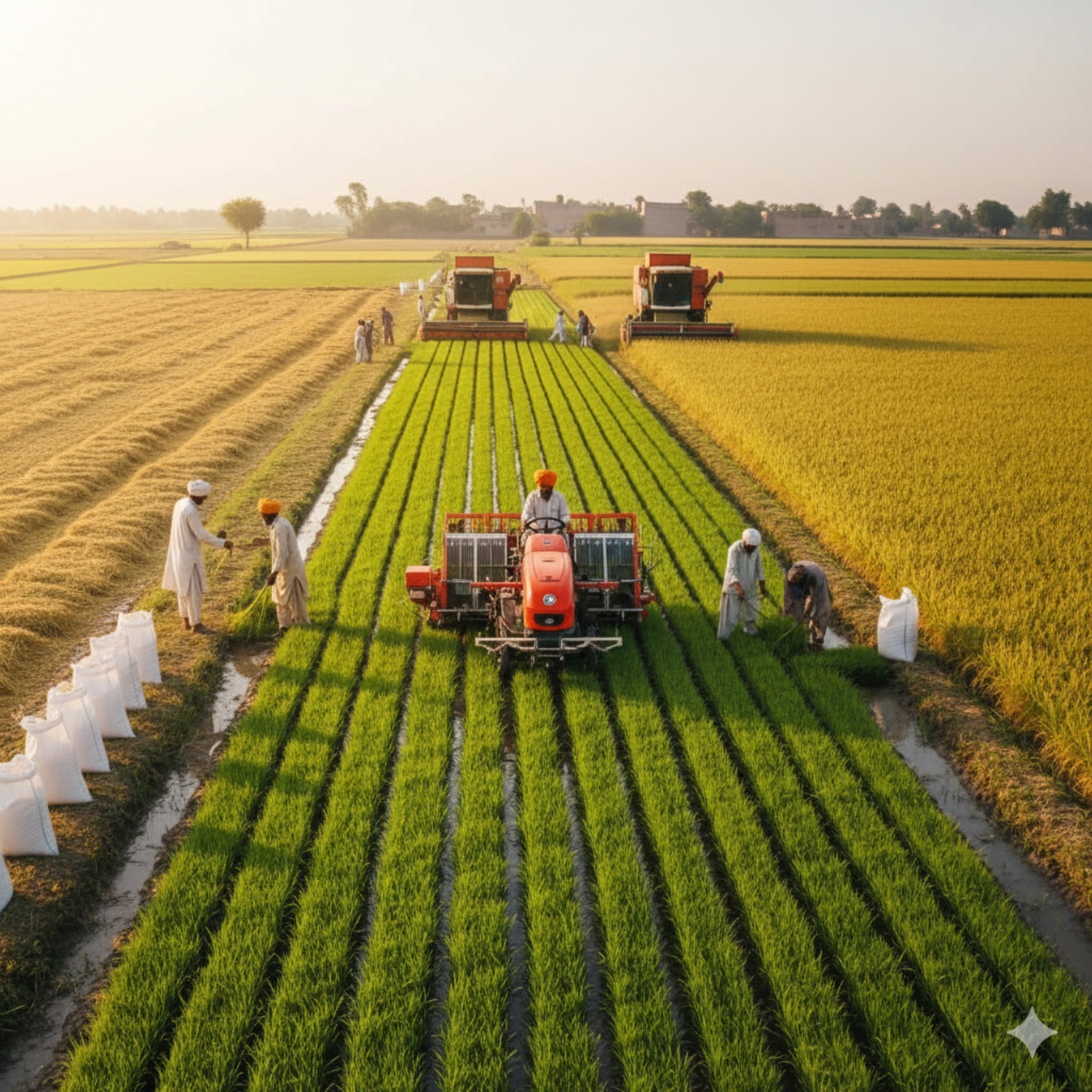
- Mechanisation drives productivity. MFTC’s introduction of Kubota agricultural machinery and mechanised operations covers thousands of acres of land across major rice belts in various cities.
- Value-chain integration has grown. From seed to harvest to export, MFTC’s “farm to plate” strategy has shown strength in multiple stages of the chain.
These trends create a stronger export base; however, they don’t completely erase the challenges.
Major Ongoing Challenges Facing Agriculture
Pakistan’s agriculture export sector faces several hurdles that compromise its potential:
- High cost of inputs and machinery. Many farmers cannot afford advanced equipment, even when it boosts efficiency. This might be due to lack of resources, income, or monterey funds.
- Fragmented land holdings. Small farms limit large-scale mechanisation, which affects output and export-scale quality.
- Infrastructure and logistics gaps. Milling, storage, and transport often lack the scale or reliability needed for consistent high-quality exports.
- Quality and certification standards. Global buyers expect strict traceability, hygiene, and processing standards. Falling short hurts reputation and market access. MFTC invests in R&D and certified processing to meet these standards.
- Dependence on rain and traditional methods. Without mechanisation and modern irrigation, agriculture remains vulnerable to weather and inefficiency.
Addressing these challenges is essential if Pakistan is to expand its agricultural export footprint.
The Role of Agricultural Machinery in Pakistan
Mechanisation makes a real difference. That’s where agricultural machinery in Pakistan plays a vital role. When a farmer uses reliable equipment, production becomes more efficient and crops meet export quality faster.
MFTC provides authorised Kubota agricultural machinery in Pakistan. This equipment handles tasks like nursery raising, transplanting, and harvesting in major districts. Kubota machines reduce labour, fuel costs, and time. They also help fields stay more uniform, which is an advantage when buyers abroad demand consistent quality.
Mechanised operations also let farmers cultivate larger areas, leading to higher yields per acre of land. When coupled with proper processing and logistics, this chain of mechanisation contributes directly to export growth.
Export Strategy & Sustainability
For export growth to last, the strategy needs to include sustainability and value addition. At MFTC, we work on multiple fronts:
- Farming support and extension services.
- Mechanised agricultural operations using Kubota machines.
- Enhanced processing and packaging to meet export standards.
- Diversified export markets across China, Indonesia, Europe, and more.
This layered approach helps turn crops into high-value products, not just raw commodities. It also strengthens Pakistan’s position in global agricultural trade.
Takeaways for Exporters & Farmers
- Investing in quality machinery like Kubota helps raise yield and export quality.
- Integrating the value chain, from seed to shipping, adds competitive strength.
- Exporters must prioritize global standards to access premium markets.
- Policymakers should support mechanization and infrastructure to raise national capacity.
- Farmers and businesses that adapt will benefit most in the evolving global market.
In summary, Pakistan’s agricultural export sector stands at a key point. With rising demand abroad and rising internal capacity, momentum exists. But for the growth to last, mechanization, equipment investment, such as true-value agricultural machinery in Pakistan, and value-chain integration must scale further. Companies like MFTC, which bring machines, processing, and farmer support together, will lead that change.
FAQs
1. How does MFTC leverage Kubota agricultural machinery in Pakistan?
A: MFTC is the authorized distributor of Kubota machinery and supports mechanized rice-farming operations across major districts. These machines handle nursery raising, transplanting, and harvesting.
2. What crops drive Pakistan’s agriculture exports?
A: Rice remains the largest. Guar gum, sesame, corn, and other grains also play growing roles. MFTC sources multiple grains and value-adds via processing.
3. What stops faster export growth in Pakistan’s agriculture?
A: Major barriers include high input costs, small land holdings, logistics, and quality-certification gaps. Mechanization and supply-chain improvements can help.
4. Can the use of agricultural machinery improve export yield?
A: Yes. The right equipment improves efficiency, reduces costs, and increases quality, making crops more competitive in global markets.
5. What strategy does MFTC use for sustainability?
A: MFTC combines farming support, mechanization (with Kubota machines), processing/packaging, and export diversification to build a resilient and value-added agriculture business.
Leave a Reply