
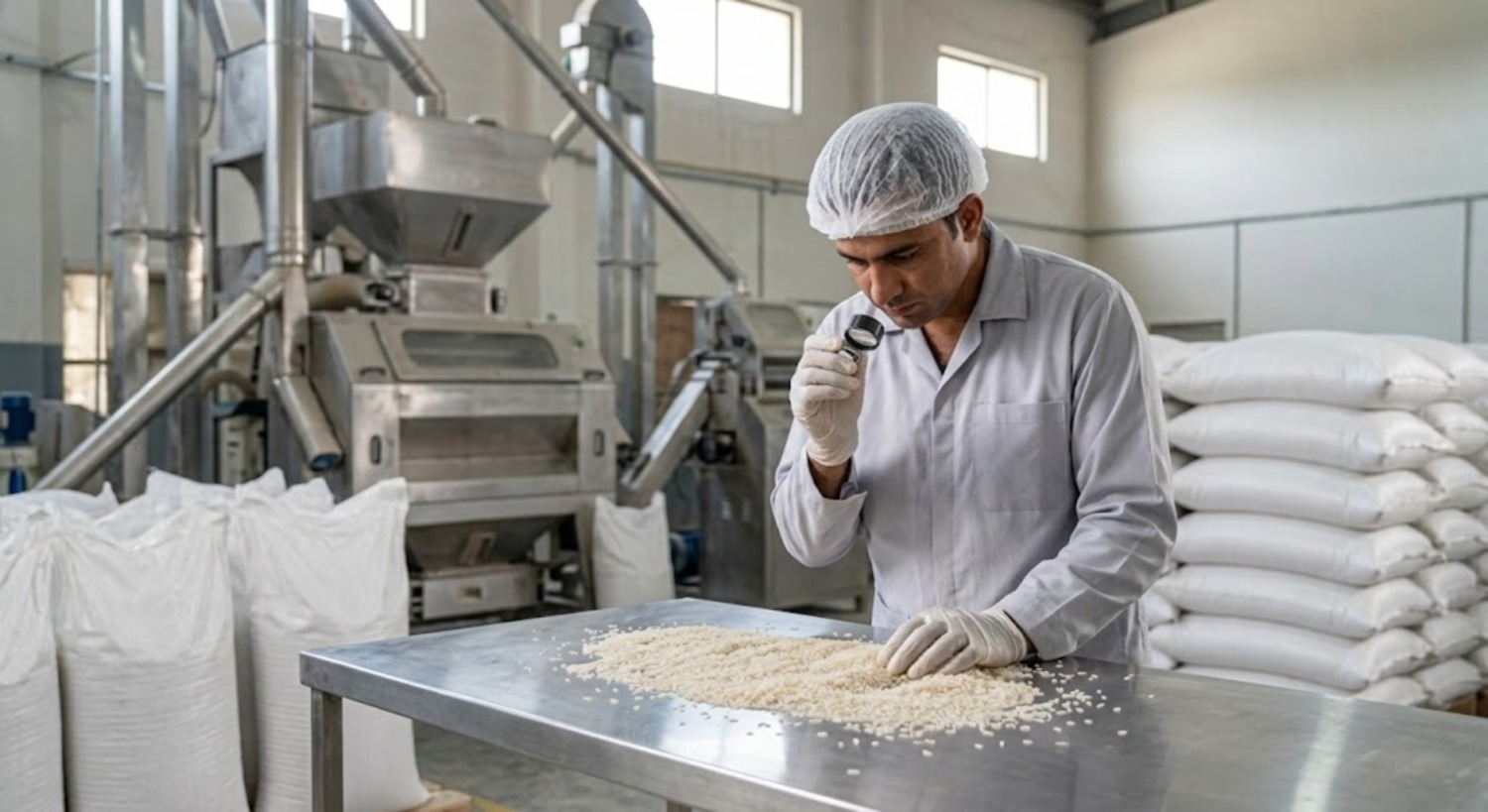
Imagine this: You’ve just cleared a 20-foot container of premium Basmati at your local port. The documents look perfect. But when you open the bags at the destination, you’re hit with a musty smell, or worse, the grains break apart the moment they are cooked.
For rice importers, this is the ultimate nightmare. A single quality complaint can tarnish a brand’s reputation that took years to build.
While many guides tell you to “check the certificates,” the reality of quality control in the global rice trade is far more practical. It happens in the paddy fields of Punjab, the milling lines in Karachi, and the humid air inside a shipping container.
At Meskay & Femtee (MFTC), we have spent decades managing the supply chain from farm to plate. Here is the insider strategy smart importers use to avoid quality complaints before they happen.
1. Move Beyond “Premium” – Define Your Specs
One of the most common reasons for disputes is vague terminology. In the rice trade, words like “Premium,” “A-Grade,” or “Export Quality” are subjective. A sample that looks “Premium” to a supplier in Pakistan might be “Standard” to a buyer in Europe.
To avoid this, seasoned importers rely on a strict Specification Sheet attached to the contract. This shouldn’t just list the rice variety; it must quantify the imperfections.
Your Quality Checklist Should Include:
- Broken Percentage: Be specific. Is it 2% or 5%? (Standard export grade is often 5% for non-Basmati, but premium Basmati orders often demand <2%).
- Moisture Content: The standard is 12% to 14%. Below 12%, grains become brittle and break during milling or transit. Above 14%, you risk mold and fungus.
- Chalky Kernels: These white, opaque spots ruin the look of cooked rice. Set a maximum limit (e.g., Max 3%).
- Foreign Matter: Stones, husks, or paddy grains. The tolerance should be near zero (0.1% – 0.2%).
2. The Invisible Enemy: Shipment Sweating
You might load perfectly dry rice in Karachi, but as the ship moves through different climate zones (e.g., from the hot Arabian Sea to a freezing European winter), the temperature difference causes condensation inside the steel container. This is called “container rain.” It drips onto your rice bags, causing water damage and mould, even if the rice was perfect when loaded.
How to prevent it:
- Desiccants: Ensure your supplier places high-absorption desiccant bags inside the container (not just the rice bags).
- Kraft Paper Lining: Demanding that the container walls and floor be lined with Kraft paper or cardboard absorbs excess moisture and protects the bags from rust or dirt on the container floor.
3. Visual Quality vs. Cooking Quality
A batch of rice can look like pearls but cook into a mushy paste. This usually happens when importers focus solely on physical appearance (whiteness and length) and ignore the chemical properties.
The “Cooking Test” Protocol:
Before sealing a bulk order, request a Pre-Shipment Cooking Test. You aren’t just buying grain; you are buying a meal experience.
- Elongation Ratio: Does the grain actually double in length when cooked? (Crucial for Super Basmati).
- Gel Consistency: This determines if the rice remains soft or turns hard after cooling.
- Aroma: For Basmati, the scent is its soul. Authentic Basmati should smell sweet and nutty naturally, without artificial scents.
4. The “Farm to Plate” Advantage
The safest way to ensure rice quality is to shorten the chain of custody.
Many complaints arise when you buy from “traders” who aggregate rice from dozens of small, unregulated mills. They mix different batches to meet volume, leading to inconsistent cooking results.
Importers avoid this by partnering with vertically integrated exporters like MFTC. Because we manage the process from seed to harvest (using our own Kubota machinery and Naubahar seeds) and own the milling infrastructure across five locations (Karachi, Larkana, Shikarpur, etc.), we control the consistency of the grain. We don’t just buy rice; we grow it.
5. Third-Party Inspections (The Final Shield)
Trust is good, but verification is better. Never rely solely on the supplier’s internal report for your first few orders.
Mandate a Pre-Shipment Inspection (PSI) from a reputed global agency like SGS or Bureau Veritas.
What they check:
- Weight verification: Ensuring you get the tonnage you paid for.
- Visual quality: Confirming the specs match your contract.
- Loading Supervision: They watch the bags go into the container to ensure no hooks are used (which tear bags) and that the container is clean and odorless.
Summary: The Zero-Complaint Workflow
If you want to sleep soundly while your cargo is at sea, follow this workflow:
- Define Specs: Don’t use adjectives; use numbers (Moisture <14%, Broken <2%).
- Verify Source: Choose suppliers with their own mills and farming infrastructure.
- Protect the Cargo: Mandate desiccants and Kraft paper lining to stop container rain.
- Test the Cook: Verify the aroma and elongation, not just the raw look.
- Inspect: Use a third-party agent to seal the container.
Ready to secure your next shipment?
At Meskay & Femtee Trading Company, we combine decades of heritage with state-of-the-art milling technology to deliver rice that meets the world’s strictest standards. From the farm in Punjab to your warehouse, we guard the quality so you don’t have to worry.
Contact MFTC Today for a Quote.
FAQs
1. What is quality control in rice?
Quality control (QC) in rice is the systematic monitoring, testing, and inspection of rice throughout its entire production cycle, from cultivation to milling and final packaging, to ensure it meets safety, purity, and aesthetic standards
2. Which is the highest quality rice?
Basmati rice. Basmati rice is one of the most popular and esteemed types of rice.
3. How to find buyers for rice?
You can find and get genuine buyers by using online marketplaces, attending trade shows, networking, and leveraging B2B platforms. It’s also important to conduct background checks and offer quality products and customer service.
Leave a Reply