
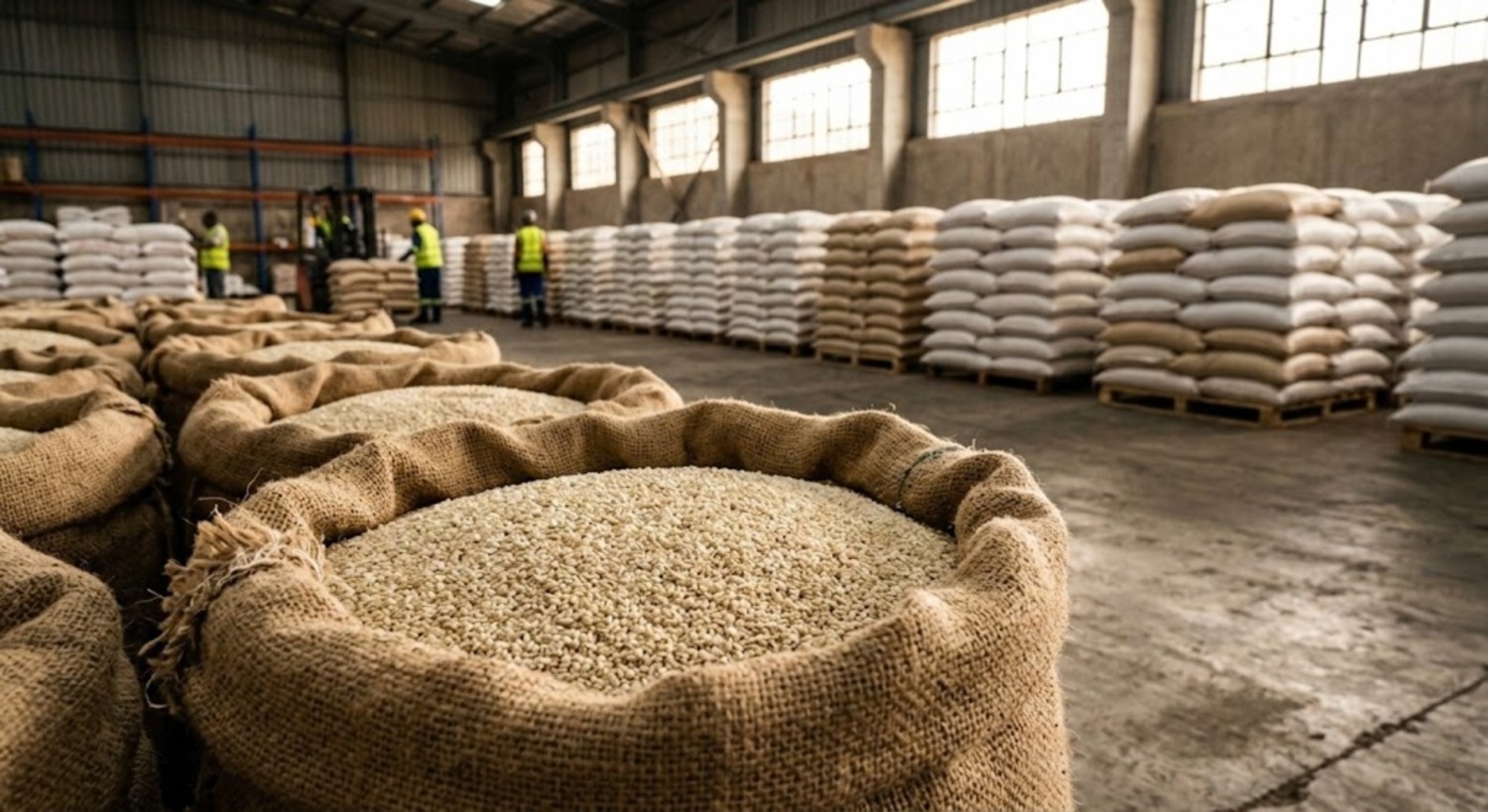
If you are a bulk buyer of sesame seeds, you’ve likely experienced the “Inconsistency Headache.” You order a container of Grade A Natural White Sesame, but upon arrival, it appears slightly more biscuit-coloured than white. Or perhaps the seeds from your last shipment had a glossy sheen, but this one looks matte and dusty.
In the world of seed grading, these variations aren’t always a sign of a “bad” supplier. Sesame is a biological product that is highly sensitive to its environment.
At Meskay & Femtee (MFTC), we manage thousands of tons of sesame exports. We know that understanding why these changes happen is the key to maintaining a stable supply chain. Here is the science behind why sesame seeds look different in every shipment and how to ensure you’re getting the seeds quality you paid for.
1. The Genetic Blueprint (Variety vs. Grade)
The most common mistake buyers make is confusing a variety with a grade.
- Variety: This is determined by the seed’s DNA. For example, Pakistani sesame (Sindu-1) naturally has a different whiteness index than Ethiopian Humera or Sudanese Gadaref.
- Grading: This is a mechanical process. Seed grading involves removing “admixture” (stones, stalks, and dust) and “off-colour” seeds.
Even if you buy the same grade (e.g., 99.9% Purity), a shift in the growing region, even by a few hundred miles, can change the soil minerals, resulting in a slightly different hue in the seed coat.
2. The Role of “Free Fatty Acids” (FFA)
Seed quality isn’t just about what you see on the outside; it’s about the chemistry inside. Sesame seeds are roughly 50% oil. When seeds are exposed to heat or high moisture, the fats begin to break down into Free Fatty Acids (FFA).
- High FFA: Makes the seed look dull, slightly yellowish, and can eventually lead to a “rancid” smell.
- Low FFA (<1.5% to 2%): Keeps the seed looking bright and tasting sweet.
If your shipment looks “tired” or off-colour, it’s often because the FFA levels rose during a long, hot transit across the ocean.
3. Processing: Mechanical vs. Sortex Cleaning
The “look” of your shipment depends heavily on the technology used at the mill.
- Double-Cleaned: Usually involves sieves and gravity separators. It removes stones but might leave “biscuit” colored seeds in a white batch.
- Sortex-Cleaned: This uses high-speed cameras to “shoot” out any seed that doesn’t match the exact colour profile.
If your supplier switches from a 3-camera Sortex to an older model, your seeds will suddenly look less uniform, even if the “purity” percentage remains the same on paper.
4. The “Moisture Bounce” in Transit
Sesame is hygroscopic; it breathes. We typically export sesame at a moisture content of 5% to 7%. However, if the container sits in a humid port like Karachi or Dubai for too long, the seeds can absorb ambient moisture.
This extra moisture causes the seed coat to swell slightly, losing its “pearl” finish and appearing more opaque or “flat.” This is why at MFTC, we prioritize rapid container loading and the use of high-quality desiccants to lock in that “fresh-from-the-mill” look.
How Importers Can Ensure Consistency
To stop the “guessing game” with every shipment, seasoned importers use these three professional tactics:
- Request a Whiteness Index: Don’t just ask for “white.” Ask for a specific colour spectrometer reading if your end-use is high-end confectionery.
- Fix the FFA Limit: Ensure your contract specifies a maximum FFA (usually <2%) to prevent receiving oxidized or “yellowing” seeds.
- The “Rub Test”: When your shipment arrives, rub a handful of seeds between your palms. High-quality seeds with good oil content will leave a slight, clean sheen. If they leave a heavy, dusty residue, the grading or cleaning process was insufficient.
The MFTC Difference
At Meskay & Femtee, we don’t just trade seeds; we control the variables. By managing the supply chain from the primary procurement centers to our state-of-the-art cleaning facilities, we minimize the “shipment-to-shipment” variance that plagues the industry.
Ready for a consistent, high-quality sesame supply?
View our Sesame Seed Specifications or Request a Sample Batch here.
FAQs
1. What are sesame seeds?
Sesame is one of the first oil crops used by humans. It is widely grown and has a mellow flavour and high nutritional value, making it popular in diets.
2. What is sesame seed grading?
It involves separating seeds by size, shape, and other characteristics. The sorting process removes all damaged or defective seeds to make sure you receive a high-quality product.
3. What are sesame seed quality parameters?
These are the parameters upon which sesame seeds are labelled as high quality. They are uniform in size, weight, and colour and free from stones, debris, and dust, leaves, twigs, stems, flowers, fruit, and other crop seeds and inert materials.
Leave a Reply