
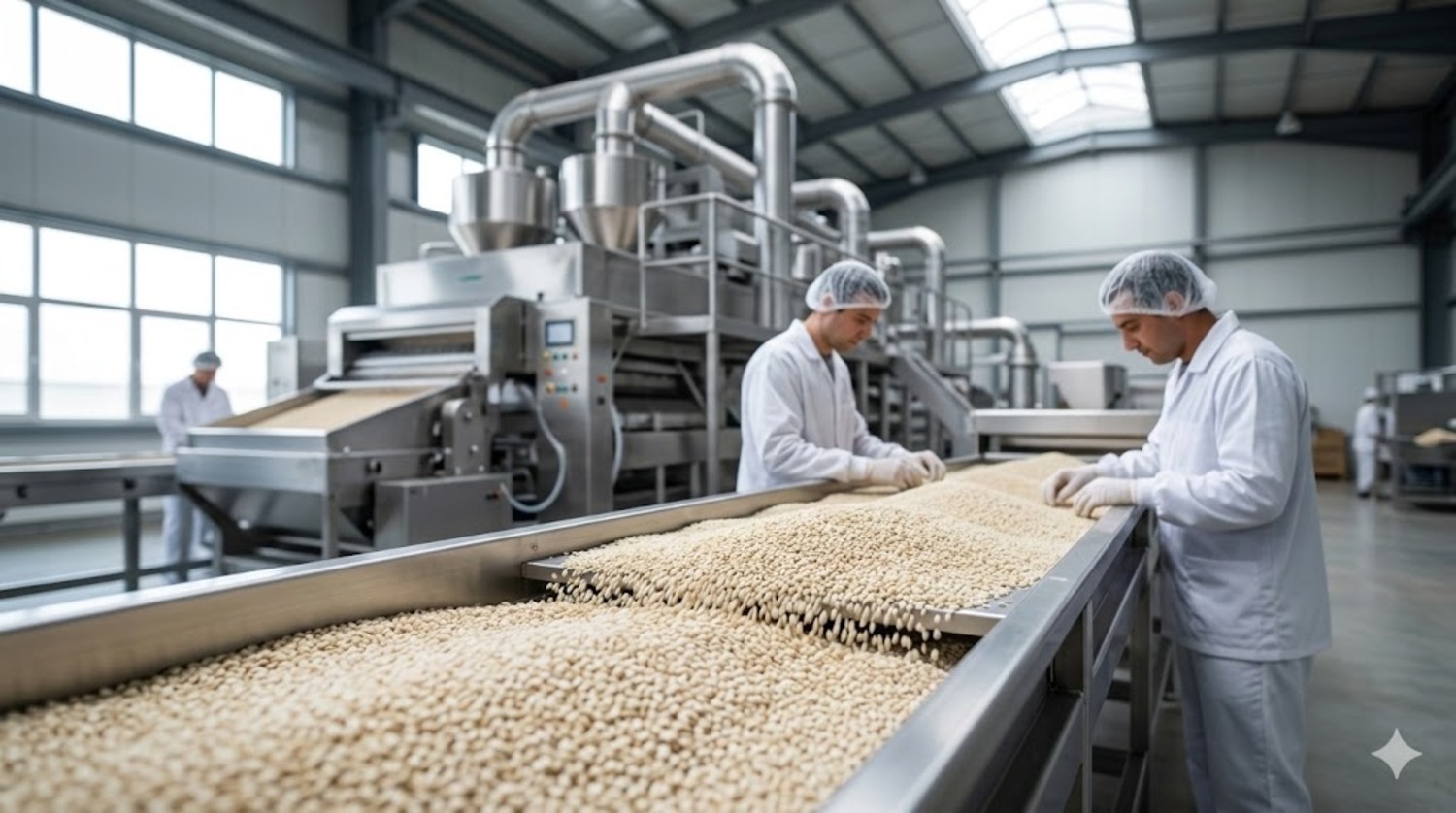
In the global agricultural market, sesame seeds are often called “the queen of oilseeds.” For a business like MFTC, understanding the mechanics of sesame seeds export isn’t just about moving volume; it’s about meeting a complex set of global standards that turn a simple seed into a high-value commodity.
If you are looking to source bulk sesame seeds, this guide explains why sesame is uniquely suited to export and how advanced seed processing makes the difference between a rejected shipment and a premium-grade product.
What Makes Sesame Seeds the Ideal Commodity for Bulk Export?
Unlike many agricultural products that are fragile or highly perishable, sesame seeds possess a natural “biological armour” that makes them a favourite for international traders.
1. Incredible Shelf Stability and Low Moisture
One reason sesame is well-suited for mass export is its long shelf life. Sesame seeds that are high quality have a moisture content of less than 6-7%. This low moisture content, combined with natural antioxidants such as sesamin and sesamolin, helps sesame seeds resist rancidity and remain fresh for a long time. They can also retain their nutritional value for up to 2 years when stored in a cool, dry environment.
2. High Value-to-Weight Ratio
For exporters, it’s all about their shipping costs. Sesame is small-sized and can be easily packed for tonnage loading in 20ft-40ft standard containers. Approximately 19 MT of sesame can be loaded into a 20ft FCL (Full Container Load). Such efficiency makes shipping across oceans more economical than with bulkier, lighter crops.
3. Diverse Industrial Demand
The versatility of the seed ensures there is always a buyer. From the bakery industry in Europe to tahini production in the Middle East and oil extraction in East Asia, the global demand is decentralized. This “universal demand” reduces the risk for bulk exporters, as they are not reliant on a single market’s economy.
The Role of Modern Seed Processing in Export Quality
Raw sesame straight from the field is rarely “export-ready.” To qualify as a first-class supplier, seed processing must eliminate farm-gate quality issues and ensure regulatory compliance worldwide.
- Purity & Cleaning: International buyers often request a purity of 99.9%. The process includes three cleaning stages that pass through gravity separators and de-stoners to remove sand and stalks and extract foreign seeds.
- Hulling Technology: While “Natural Sesame” (unhulled) is popular for oil, “Hulled Sesame” is the gold standard for the confectionery industry. Modern mechanical hulling removes the skin without using chemicals, preserving the seed’s pearly white appearance and nutritional integrity.
- Colour Sorting: Advanced laser sorters detect and remove discoloured seeds. For premium exports, colour uniformity is a key price driver.
Other Missed Factors That Play A Huge Role
While most blogs focus on “how to buy,” they often overlook the technical and environmental risks that savvy importers worry about. At MFTC, we address these critical gaps:
-
The Aflatoxin & Salmonella Factor
Many exporters fail to mention food safety microbiological standards. For a shipment to pass EU or USFDA inspections, it must be free from Salmonella and have Aflatoxin levels below 4ppb (parts per billion). We prioritize rigorous lab testing before any container is sealed.
-
Traceability & The “Farm-to-Port” Story
Modern buyers want to know where their seeds grew. The industry is moving toward Blockchain Traceability. Providing a transparent supply chain from the nutrient-rich soils of Punjab or Sindh to the final packaging builds a level of trust that “bluff-heavy” blogs can’t match.
-
Climate Resilience & Sourcing Stability
Climate change is affecting yields in traditional hubs like Sudan. Pakistan has emerged as a powerhouse (ranking among the top exporters in 2023-2024) because our hybrid varieties are more heat-tolerant and offer a higher oil content (up to 50-58%).
Buyer’s Checklist: Evaluating Bulk Sesame Seeds
If you are sourcing for your business, ensure your supplier meets these “Golden Standards”:
| Feature | Export Requirement |
| Purity | 99% to 99.9% |
| Moisture | Max 6% |
| Oil Content | Min 48% |
| FFA (Free Fatty Acid) | Less than 2% |
| Packaging | 25kg/50kg Multi-layer PP or Paper Bags |
Why MFTC is Your Strategic Partner in Sesame Export
At MFTC, we don’t just trade; we curate. We understand that bulk sesame seeds represent a significant investment for your business. By combining traditional sourcing with modern seed processing technology, we ensure every shipment meets the stringent requirements of the global market.
Ready to source premium sesame seeds?
Whether you need Natural White, Black, or Hulled sesame, our team is equipped to handle your bulk requirements with full transparency and logistical excellence.
Contact MFTC Today for a Custom Quote
FAQs
1. Which countries import sesame seeds from Pakistan?
Pakistan accounts for approximately 13.74% of the total global export value of Sesame Seed, with an export value of 414,457,103 USD. The top countries importing Sesame Seed from Pakistan include Kazakhstan, South Korea, Vietnam, and Japan.
2. Where can I buy sesame seeds in bulk?
To buy high-quality sesame seeds in bulk, contact MFTC for relevant details.
3. Who is the biggest exporter of sesame seeds?
In 2023, Pakistan ($414,457.10K, 239,092,000 Kg) ranked among the Top 5 exporters of Sesame seeds.
Leave a Reply