
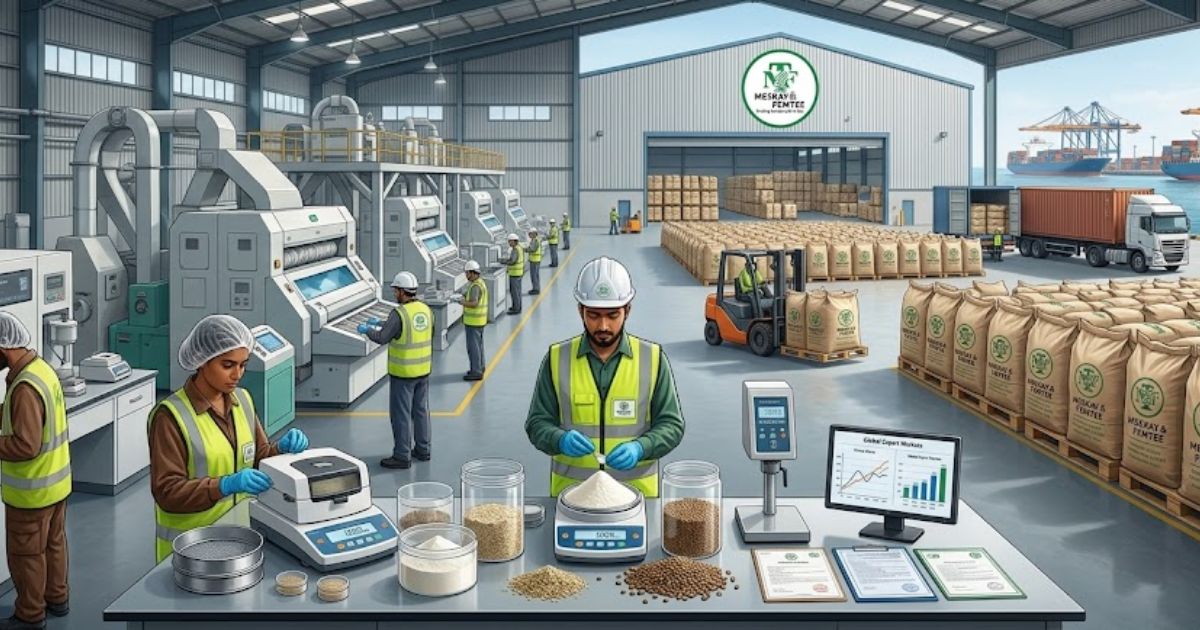
The global guar gum pricing depends on a tight balance between farm yields and industrial demand. Because supply centres in Pakistan, volatile monsoons and crop shortages cause immediate price spikes. Meanwhile, shifting oilfield activities and food trends are bringing sudden changes in purchase volumes.
Understanding Guar Gum Product Specifications
Evaluating product specifications ensures you select the correct guar gum grade for your application.
- Viscosity: Shows the actual thickening strength.
- Mesh Size: Explains how fine the powder is.
- Moisture Level: Controls how long the product lasts.
- Protein Amount: Signals the true purity of the batch.
- Gum Strength: Measures the active binding power.
- Hydration Speed: Tracks how fast the liquid thickens.
What Affects Guar Gum Prices in Global Markets?
The global guar gum market depends on the production volume and the industrial need.
- Volatile monsoon rain patterns.
- Rising factory energy costs.
- Clean-label food-grade guar gum.
- Seasonal raw crop yields.
- Unpredictable ocean freight rates.
Supply and Demand Impact on Guar Gum Pricing
Global guar gum supply and industrial demand determine the market.
- Shifting oilfield exploration alters demand.
- Erratic monsoons disrupt crop supply.
- Food factories scale up natural thickeners.
Monitoring such supply and demand changes allows global buyers to anticipate market fluctuations and secure stable pricing.
Quality Standards and Their Impact on Pricing
The physical and chemical specifications of guar gum powder directly dictate its market value.
| Quality Parameter | Standard Specification | Impact on Export Pricing |
|---|---|---|
| Viscosity Range | 3,500 – 7,000+ cps | Higher viscosity commands premium pricing. |
| Mesh Size | 100 to 300 Mesh | Finer mesh increases processing costs. |
| Purity Level | 80% Min Galactomannan | High purity levels demand top export rates. |
| Microbial Load | E-412 Compliant | Strict sterilization increases final export value. |
These metrics help procurement teams justify price differences and select the exact grade needed.
Factors Affecting Guar Gum Export Pricing
The global guar gum market rests on the balance between production output and industrial requirements. Navigating the market shifts requires tracking the specific logistics, environmental factors, and processing costs that set daily export rates.
-
Seasonal Rainfall Fluctuations
As a rain-fed crop grown primarily in Pakistan, guar yields depend entirely on seasonal monsoons. Inadequate or delayed rainfall spikes raw seed costs, immediately driving up global export pricing.
-
MFTC Strategic Supply Chains
Leading exporters like MFTC leverage advanced manufacturing and established logistics networks to streamline distribution. Their bulk cargo shipping options help cushion international buyers against sudden domestic market shocks.
-
Varying Factory Processing Costs
Transforming raw guar splits into high-viscosity powder requires significant energy and advanced milling machinery. Rising electricity tariffs and manufacturing overheads directly inflate the final FOB export value.
Contacting the leading guar gum suppliers like Meskay & Femtee Trading Company (Pvt) Ltd can help you get stable pricing and quality amid market shifts.
Different Types of Guar Gum Products in Global Markets
The market has a lot of grades of guar gum products, each tailored to specific industrial functions based on viscosity, hydration speed, and purity.
Industrial Grade Guar Gum Powder
Engineered for rapid hydration, this grade is essential in the oil and gas sector for hydraulic fracturing and drilling fluids. It is also heavily utilized in the textile, mining, and paper manufacturing industries.
MFTC Fast-Hydrating Guar Gum Powder
Produced in advanced milling facilities, this premium industrial product provides optimal thickening and consistent viscosity. It serves as a dependable solution for global clients requiring efficient, large-scale industrial processing.
MFTC Food & Pharma Grade Powder
Processed under strict international quality standards, this grade guarantees total purity and safety compliance. It’s great for sensitive food applications like pharmaceuticals, and cosmetics, requiring highly controlled microbial limits.
Global Industries Driving Guar Gum Demand
The shift toward natural ingredients drives global guar gum demand, aligning with current guar gum market trends across multiple sectors. As a trusted supplier, MFTC has the premium solutions to meet this rising international need.
- Oil and Gas (Hydraulic Fracturing)
- Food and Beverage Processing
- Pharmaceuticals and Cosmetics
- Textile Printing and Dyeing
- Paper and Packaging Manufacturing
MFTC ensures each industry receives the exact product grade needed to meet their specific needs.
How to Choose the Right Guar Gum Grade
Selecting the ideal grade requires balancing your industry’s technical needs with cost efficiency.
- Identify Viscosity Needs
- Check Purity Standards
- Assess Hydration Speed
- Consult MFTC Experts
Choosing the right grade ensures you balance your technical specs and budget perfectly.
Conclusion
The global guar gum market remains deeply connected to both farming success and heavy industrial needs. Pakistan drives the bulk of this worldwide supply chain. While weather patterns dictate raw crop yields, shifting oil exploration and clean-label food trends control demand. Businesses must partner with reliable suppliers to navigate these frequent market price changes.
FAQs
1. How is guar gum pricing determined globally?
Pricing is determined by quality specs. Higher viscosity, finer mesh sizes, and stricter purity standards command premium rates.
2. What affects guar gum export prices?
Prices are driven by seasonal monsoon rain patterns, factory processing overheads, and fluctuating shipping costs.
3. Why does guar gum demand fluctuate?
Demand shifts based on global crude oil drilling activity and changing production volumes in the food sector.
4. Which industries use guar gum the most?
The oil and gas industry uses it most for fracking, followed by food, pharma, and textile sectors. Animal feed, pet food, mining, and paper industries also drive massive global consumption.
Leave a Reply