
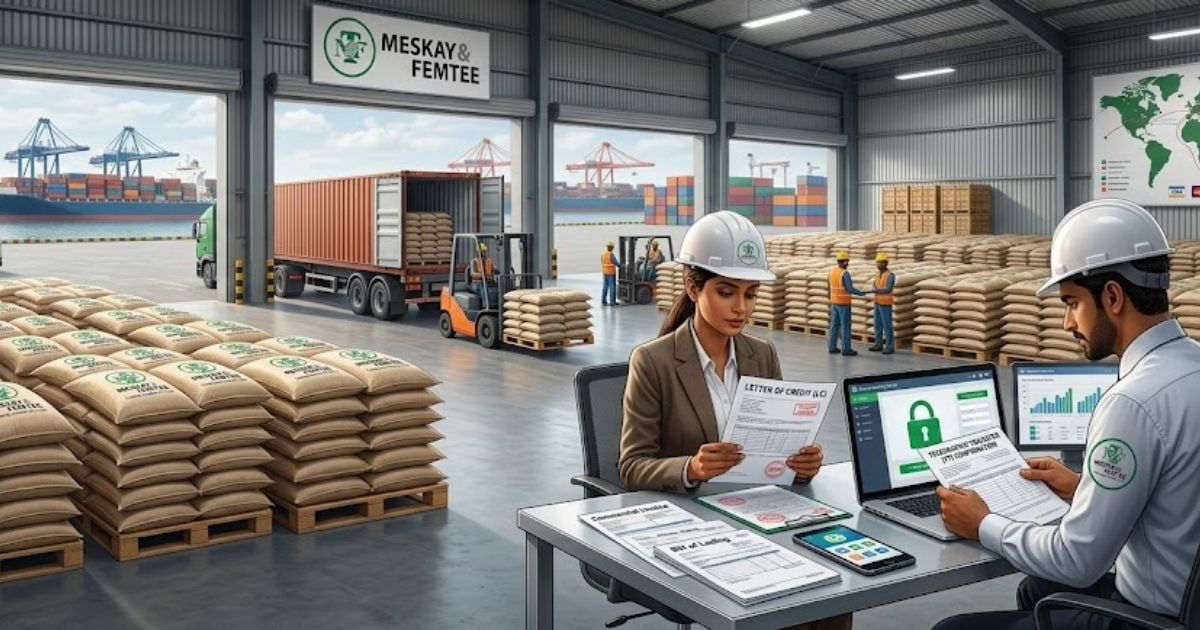
Global trade moves on trust and tight timelines. When shipping cargo worldwide, securing your money is just as vital as securing your goods. International markets rely on two primary payment methods: the Letter of Credit (LC) and the Telegraphic Transfer (TT).
Each option offers a different balance of security, speed, and cost. Choosing the right one ensures a smooth transaction.
Why Payment Methods Matter in Rice Export
Moving bulk agricultural cargo across borders requires a secure financial framework. The right payment method protects your cash flow and minimises risk.
In the global market, choosing a payment structure is a critical decision. It determines who holds the financial risk while the inventory is out at sea. The right choice secures your capital before your cargo even leaves the port.
- Minimises cross-border financial risk.
- Guarantees secure seller payment.
- Protects upfront buyer capital.
- Prevents costly international fraud.
- Smooths global customs clearance.
Common Payment Methods Used to Export Rice
International bulk shipping relies on multiple payment structures. These systems balance risk between buyers and sellers, especially when managing a large-scale rice export in Pakistan.
- Letter of Credit (LC): Bank-backed payment based on document verification.
- Telegraphic Transfer (TT): Fast, direct electronic wire transfer.
- Cash Against Documents (CAD): Payment required before the bank releases documents.
- Open Account (OA): Shipping goods before the payment is due.
- Documentary Collection (DP): Bank handles the document-for-cash exchange.
- Advance Payment: Full payment upfront before shipping the cargo.
What is a Letter of Credit (LC)?
A Letter of Credit (LC) is a bank-backed guarantee. It ensures a seller gets paid by a buyer once all shipping terms are met.
- Bank Guarantee: The bank covers the payment if the buyer defaults.
- Reduces Risk: It protects global traders from fraud and missed payments.
- Conditional Release: Funds move only after shipping documents are verified.
- Strict Deadlines: It requires exact paperwork to trigger the transaction.
What Is Telegraphic Transfer (TT)?
A Telegraphic Transfer (TT) is a digital bank-to-bank wire transfer. Traders use it to pay for international goods quickly.
- Direct Transfer: Sends money directly from the buyer’s account to the seller’s account.
- Fast Clearing: Funds usually clear within 1 to 4 business days globally.
- Cost-Effective: It costs much less than complex bank credit lines.
- Higher Risk: It offers no safety net if a partner fails to ship or send the money.
Types of Letter of Credit Used in International Trade
High-volume commodities like rice exports require the right financial tools. Utilising the correct type of LC ensures that payments remain protected. This shields traders against market volatility and shipping delays.
Here are the main types of Letters of Credit used to secure a rice export business in Pakistan:
Irrevocable LC
This agreement cannot be changed or cancelled without everyone’s consent. It offers maximum safety for the transaction.
Revocable LC
The buyer’s bank can alter or cancel this LC at any time. It provides no real security and is rarely used.
Confirmed LC
A second bank guarantees payment if the buyer’s bank fails to pay. This is usually the seller’s local bank.
Unconfirmed LC
Only the buyer’s bank guarantees the payment. It carries slightly more risk for the exporter.
Transferable LC
This allows the seller to pass the credit to another supplier. It is ideal for intermediaries and subcontractors.
Standby LC (SBLC)
This functions like a backup safety net. The bank only pays if the buyer defaults on the contract.
Revolving LC
This type automatically renews its value for multiple shipments. It saves time on repeat orders over a set period.
LC vs TT: Key Differences Explained
| # | Feature | Letter of Credit (LC) | Telegraphic Transfer (TT) |
|---|---|---|---|
| 1 | Concept | Bank-backed payment guarantee. | Direct electronic wire transfer. |
| 2 | Risk | Low. It protects both buyer and seller. | High. One party always takes a financial gamble. |
| 3 | Timing | Paid after verified shipping. | Paid based on agreed terms (advance or split). |
| 4 | Cost | Higher bank processing fees. | Lower standard wire transfer fees. |
| 5 | Speed | Slower. Requires setup and bank verification. | Faster. Usually completed within a few business days. |
| 6 | Best For | Large orders with new trading partners. | Small orders with trusted business partners. |
Choosing Between LC and TT in Rice Export
Learning how to handle rice export payments requires balancing speed with financial safety. High-volume shipments need careful planning. Here is why the choice matters.
- Protects Margins: Reduces the risk of unpaid shipments in a low-margin transaction.
- Manages Price Drops: Helps prevent buyers from backing out if market prices decline.
- Secures Capital: Avoids tying up significant funds during long transit periods.
- Handles Weight Changes: Provides greater clarity when dealing with moisture loss and weight variations during shipment.
Choose LC for: Large shipments, new buyers or higher-risk transactions.
Choose TT for: Faster, cost-effective transactions with trusted partners.
Choosing the wrong payment method can put pressure on your cash flow. The right choice helps protect your business and keep your global supply chain moving smoothly.
Secure Your Next Shipment with MFTC
Navigating international trade payments requires a trusted partner. As a leading agricultural exporter, Meskay & Femtee Trading Company (MFTC) ensures secure, transparent, and compliant shipping structures for every cargo.
Ready to secure your next bulk order?
Partner with MFTC today for reliable global trade solutions.
Conclusion
Opening new international routes requires secure financial planning. Relying on a strict Letter of Credit helps prevent financial loss. It holds banks accountable for every document, including the crucial Bill of Lading. It also aligns your payment methods with the correct Incoterms. Always follow the local monetary frameworks, such as the guidelines set by the State Bank of Pakistan for the exporting business.
FAQs
1. What is LC in the rice export business?
An LC, or Letter of Credit, is a formal financial guarantee issued by the buyer’s bank. It ensures the exporter receives their funds automatically once they present compliant shipping paperwork to the bank.
2. What is the TT payment for rice export?
A TT payment is a Telegraphic Transfer, which acts as a direct electronic wire transfer between international bank accounts. It is favoured for its fast processing speed and minimal banking fees.
3. Which is safer, LC or TT in rice export?
An LC is much safer for early transactions because neutral banks handle the documentation and guarantee payment fulfilment. A TT carries a higher risk for buyers or sellers and is best reserved for long-term, trusted partnerships.
4. Why are LC and TT important in rice export?
These two financial mechanisms form the core payment infrastructure for any rice export from Pakistan. They allow businesses to structure transactions safely, manage daily cash flow efficiently, and minimise international trading risks.
Leave a Reply