
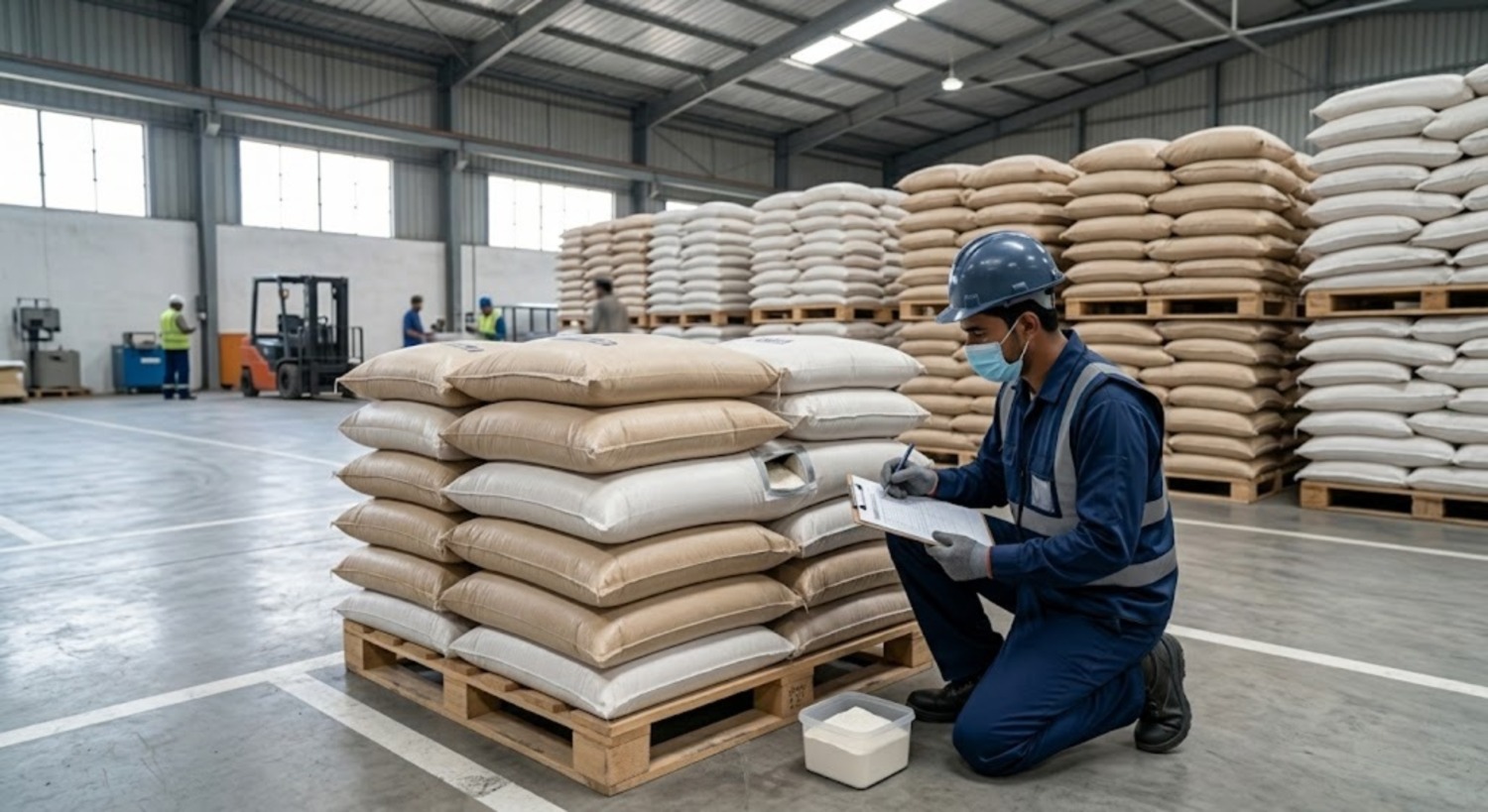
Sourcing guar gum is more than just finding a vendor with the right price; it’s about finding a partner who understands the delicate balance of viscosity, hydration, and purity. Whether you are in the food industry, oil drilling, or textile manufacturing, a bad batch of guar gum can halt your entire production line.
As an importer, how do you distinguish between brokers and manufacturers, and between “good enough” and truly export-quality?
At Meskay & Femtee Trading Company, we believe educated buyers are our best customers. We have compiled the ultimate checklist of questions to ask a potential guar gum supplier before issuing a Purchase Order.
The Ultimate Checklist of Questions
1. “Can You Provide a Certificate of Analysis (COA) for a Specific Lot?”
Many suppliers display generic specification sheets on their websites. However, export-quality guar gumvaries by crop.
- The Trap: A supplier sends you a “standard” spec sheet that doesn’t match the actual batch you receive.
- The Right Answer: A reliable supplier will provide a COA for the specific lot they intend to ship. Look for these key technical parameters:
- Viscosity: Should match your application (e.g., 3500-7500 cP for food-grade).
- Moisture Content: Ideally <12%. High moisture leads to bacterial growth during transit.
- Particle Size: Ensure the mesh size (e.g., 200 mesh) is compatible with your filtration system.
2. “What is Your Source Origin?” (The Pakistan Advantage)
Geography matters. The Guar plant (Cyamopsis tetragonoloba) thrives in arid regions.
- Why Ask: Pakistan, particularly Sindh province, accounts for approximately 75% of the country’s yield. Guar gum from this region is renowned for its high natural galactomannan content, often exceeding competitors’ levels due to favorable soil conditions.
- Tip: If a supplier cannot provide a transparent origin for their raw material, they may be blending lower-quality splits.
3. “Do You Have In-House Sterilization & Microbial Control?”
If you are importing for the food or pharmaceutical industry, this is non-negotiable. Raw guar beans may carry field-borne bacteria.
- The Specification: Ask specifically about their Total Plate Count (TPC).
- Export Quality Standard: A high-quality food-grade powder should typically have a TPC of less than 5,000 CFU/g. Ask if they use heat treatment or other sterilization methods to ensure the product remains stable during the weeks it spends in a shipping container.
4. “Which Certifications Do You Hold?”
Certifications are your insurance policy against customs rejections. A legitimate guar gum supplier should hold more than just a business license.
- Essential: ISO 9001:2015 (Quality Management) and HACCP (Food Safety).
- Market Specific:
- Halal & Kosher: Essential for exporting to the Middle East, the US, and Southeast Asia.
- FSSC 22000: Often required by major multinational food brands.
- Non-GMO: Increasingly demanded by European buyers.
5. “How Do You Handle Moisture Protection in Packaging?”
Guar gum is highly hygroscopic, it readily absorbs water. If your shipment travels by sea, humidity is the enemy.
- The Test: Ask about their packaging layers.
- The Gold Standard: Export-quality packing typically uses a multi-layer paper bag with a high-density polyethylene (HDPE) inner liner. Some suppliers even offer vacuum packing or shrink-wrapped palletization to ensure the viscosity you buy is the viscosity you receive.
6. “What is Your Fast Hydration Capability?”
For industries such as Oil & Gas (Fracking), standard guar gum may react too slowly.
- The Technical Question: “What is the Fann Viscosity reading after 3 minutes versus 60 minutes?”
- Why it Matters: High-quality “Fast Hydration” guar gum should achieve a significant percentage of its final viscosity within the first few minutes. If a supplier cannot provide these curves, they likely do not understand the energy sector’s technical requirements.
7. “Can We Audit Your Facility (or see a virtual tour)?”
Traders often pose as manufacturers. There is nothing wrong with the traders, but you need to know who is responsible for quality.
- The Reality Check: A genuine manufacturer will welcome a visit or be happy to hop on a video call to show you their lab and processing line. MFTC, for example, prides itself on transparency regarding our processing capabilities.
The Price vs. Value Equation
It is tempting to choose the guar gum supplier with the lowest price per metric ton. However, if that low price comes with 14% moisture (you’re paying for water) or inconsistent mesh sizes (clogging your machines), the “cheap” option becomes the most expensive one.
At Meskay & Femtee, we don’t just sell guar gum powder; we provide consistency. Whether you need high-viscosity food-grade or rapid-hydration industrial-grade, we deliver export-quality products backed by transparent documentation.
Ready to secure your supply chain?
[Contact Us Today] or [Request a Sample] to experience the difference of a verified Pakistani supplier.
FAQs
1. Is guar gum FDA-approved?
Guar gum is an approved food additive regulated by international bodies like the FDA,
. What is the raw material for guar gum?
Guar gum is obtained from the seeds of the guar bean
3. What is the shelf life of guar gum?
Under optimal storage conditions, guar gum powder typically has a shelf life of 12-24 months. However, this can vary based on factors such as quality of the product and packaging type.
Leave a Reply