Kubota Combine Harvester: A Smog-Free Future for Farmers in Pakistan
Pakistan, especially the Punjab region, faces a dilemma every harvest season: how to manage crop residue efficiently. For years, burning crop stubble has been the fastest solution, but it comes with a heavy price—smog. This practice has led to severe air pollution, affecting not just the environment but the health and well-being of millions.
How Crop Residue Burning Contributes to Smog
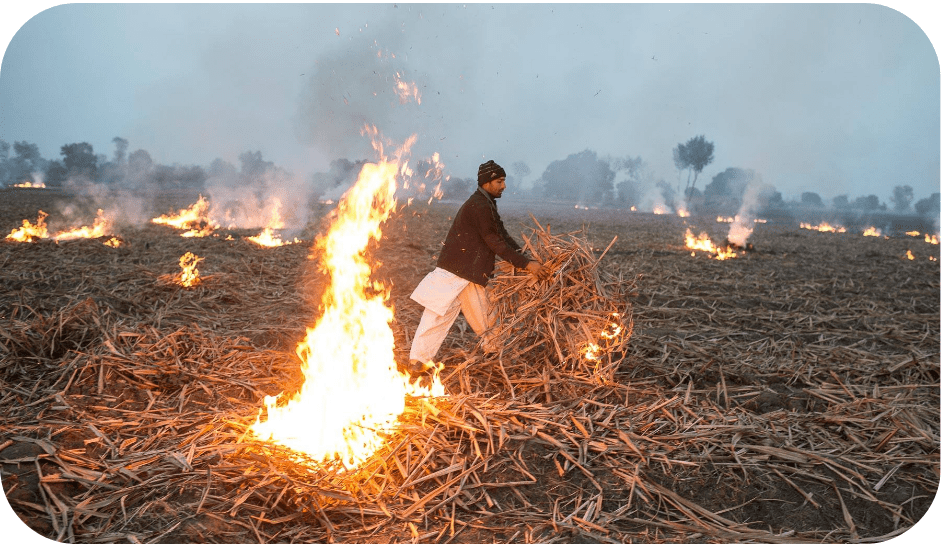
When farmers burn leftover straw and stubble after harvesting, it releases harmful particles and gases into the atmosphere. These pollutants settle in the air, creating thick smog that lingers for days, often blanketing entire regions. This leads to reduced visibility, respiratory issues, and long-term environmental damage. Unfortunately, burning is often seen as the quickest method to clear fields for the next crop cycle.
The Problem with Traditional Wheat Harvesters
Most farmers in Pakistan use outdated wheat combine harvesters to harvest rice. These full-feed harvesters leave behind large stubbles (up to 18 inches) and disperse loose straw in multi-sized stacks across the field. This loose straw is difficult to collect, and the large stubbles left behind make it challenging to prepare fields for the next crop. Farmers often resort to burning both the stubbles and straw, as it is the quickest and most economical method to clear their fields. However, this practice releases harmful pollutants into the air, contributing to the formation of smog.
Kubota Head-Feed Combine Harvesters: A Sustainable Solution
Unlike traditional wheat harvesters, Kubota head-feed combine harvesters have a more efficient harvesting mechanism. These machines cut the rice crop from the bottom of the stem, leaving minimal stubble (about 4-6 inches). The straw is ejected in neat lines, making it easy to collect for use as animal fodder.
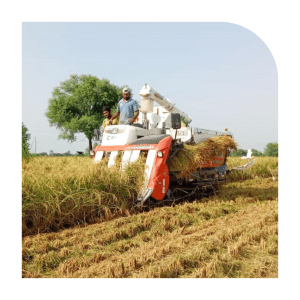
- Straw Management: The straw produced by Kubota harvesters is easily collectable, and in many regions near big cities like Lahore and Gujranwala, it has a high demand as winter fodder, fetching prices between PKR 4,000 to 10,000 per acre. In areas where straw demand is lower, Kubota machines offer an option to chop the straw into smaller pieces that can be incorporated into the soil as organic matter.
- Faster Field Clearance Without Burning: The high-capacity harvesting system in Kubota machines allows farmers to complete the harvest quickly and efficiently. With an integrated straw management system, there’s no need to burn stubble. Fields are ready for the next crop cycle without the environmental damage.
- Soil Fertility: When crop residue is incorporated back into the soil instead of being burned, it improves soil health. The organic matter enriches the land, increasing its fertility and reducing the need for chemical fertilizers. Healthier soil not only benefits farmers but also reduces greenhouse gas emissions, playing a role in combating climate change.
Reducing Smog by Managing Crop Residue
Burning crop residue not only pollutes the air but also wastes valuable organic material. When farmers use Kubota head-feed combine harvesters, they can avoid the need for burning by either selling the straw or incorporating it into the soil. This simple shift in harvesting practices can significantly reduce the emissions of harmful pollutants, including CO₂, NOₓ, and SOₓ, which contribute to smog formation.
Economic and Environmental Benefits
- Cleaner Air: With reduced crop residue burning, air quality improves, especially in regions like Punjab that face severe smog problems.
- Cost Savings: Eliminating the need for burning saves fuel costs and reduces the labor costs involved in preparing fields for the next planting season. Moreover, farmers can sell the collected straw or use it as fodder, turning waste into an additional income stream.
- Sustainability: The ability to manage residue in a way that benefits both the environment and farming practices makes Kubota harvesters a sustainable solution.
The Need for Broader Adoption
Despite the advantages of Kubota head-feed combines, they are currently used on less than 10% of the total rice-harvested area in Pakistan. The majority of the rice crop is still harvested by outdated, non-specialized wheat combines, which not only waste up to 20% of the grains but also contribute significantly to smog. To address this, there is a need for widespread adoption of more efficient harvesting technologies. Government support in the form of public-private partnerships can help make these advanced machines more accessible to small-scale farmers.
Collaborative Efforts for a Smog-Free Future in Agriculture
Addressing the smog crisis requires a collaborative approach, with government bodies, private sector leaders, and farmers working together for sustainable farming. By adopting efficient technologies like Kubota combine harvesters, farmers can manage crop residue in an eco-friendly manner. This shift promotes cleaner air, enhances soil health, and boosts agricultural profitability. With supportive policies and broader adoption of advanced technologies, the agriculture sector can align productivity with environmental sustainability, benefiting both farmers and society.

Leave a Reply