
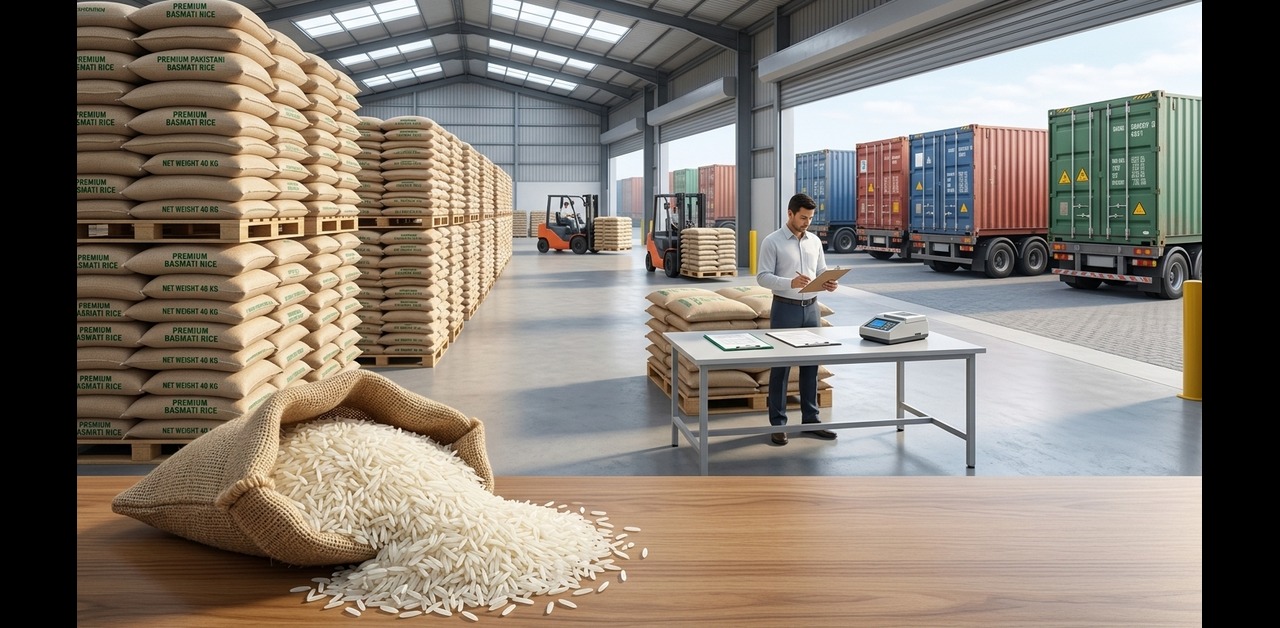
For an international trader, a bulk rice order is a significant investment, and the risks are real: broken grains that cut into margins, quality that varies from the sample, or a shipment that arrives late. The difference between a reliable rice exporter and a risky one is not the price, it is how the order is managed. This article explains MFTC’s approach to managing bulk rice orders, and how our process protects buyers at every stage.
Why Order Management Matters for Bulk Rice Buyers
Rice is one of the most important exports of Pakistan, and bulk rice export is a process involving many moving parts sourcing, milling, grading, documentation, and shipping where a failure at any stage affects the buyer. Among exporters in Pakistan, it is order management that separates the reliable from the rest. Strong order management is what keeps all of these aligned so the delivered rice matches what was agreed.
For a trader, the stakes are practical. A shipment with a higher broken percentage than specified, excess moisture, or incorrect documentation can mean financial loss, customs delays, or rejected goods. MFTC’s approach is built specifically to remove these risks, which is why traders searching for a dependable partner for rice export from Pakistan return to us, order after order.
Step 1: Understanding the Buyer’s Requirements
Every order begins with a clear, detailed specification. Before we quote or produce anything, MFTC captures exactly what the buyer needs, because an accurate order starts with accurate information.
This includes the rice variety and processing type, the quantity in metric tons, packaging preferences, the destination port, and the required quality parameters such as broken percentage and moisture. Getting these right at the outset is the foundation of how to export rice from Pakistan without costly errors later. Buyers can review our full range of Pakistani rice varieties to define their requirements precisely.
Step 2: Verifying the Order and the Buyer
Once requirements are set, MFTC confirms the details and establishes the commercial terms. This stage protects both parties and ensures the order proceeds on a secure footing.
We verify the buyer through standard business checks, confirm the specification in a proforma invoice, and agree the payment method and Incoterms before production begins. For buyers new to the process, our guide on how to export rice from Pakistan explains the full documentation journey. This clarity upfront is what prevents disputes and delays once an order is underway.
Step 3: Quality Control Before Packaging
Quality control is the heart of MFTC’s approach, and it runs through the entire milling process rather than as a single check at the end. This is where a buyer’s biggest risk of inconsistent quality is eliminated.
At each stage, rice is graded and checked against the buyer’s agreed specification for grain length, broken percentage, moisture, and purity. Only rice that meets the exact standard proceeds to packaging. As one of the most established rice exporters in Pakistan, this in-house control is what allows us to guarantee that every bag in a shipment matches the sample the buyer approved.
Step 4: Documentation and Payment
Correct documentation is essential to a smooth bulk rice export, and errors here are a common cause of customs delays. MFTC prepares the full export documentation set accurately and in line with the destination market’s requirements.
Payment terms are settled before production through internationally accepted methods such as a Letter of Credit or Telegraphic Transfer, giving both parties security. To understand how commercial terms fit together, buyers can read our guide on how rice export contracts work. Handling this correctly is a defining part of what separates professional rice exporters from unreliable ones.
Step 5: Pre-Shipment Inspection and Delivery
Before any order ships, MFTC conducts a pre-shipment inspection to confirm the order matches the agreed specification in weight, quality, and packaging. This final check is the buyer’s assurance that what leaves Pakistan is exactly what was ordered.
The rice is then loaded and dispatched to the destination port on the agreed schedule, with all documentation prepared for smooth customs clearance. This end-to-end control, from mill to port, is how MFTC delivers Pakistan rice export orders that arrive complete, compliant, and on time.
From First Order to Long-Term Partnership
For MFTC, a first order is the beginning of a relationship, not a one-off transaction. Many international traders start with a trial shipment, and once quality, communication, and delivery prove reliable, they move to regular orders.
Because the buyer’s requirements and verification are already established, repeat orders move faster and more smoothly. Long-term buyers gain a dependable, predictable supply chain with consistent quality, which is why traders across more than 150 destinations rank MFTC among the top 10 rice exporters in Pakistan that they rely on. To discuss your requirements or request a quotation, contact MFTC today.
FAQs
1. What information do buyers need to provide before placing a rice export order?
A: Buyers should specify the rice variety and processing type, quantity in metric tons, packaging preferences, destination port, and quality parameters such as broken percentage and moisture. Complete information at the enquiry stage ensures an accurate quotation and a smooth order.
2. What documents are required to start a rice export from Pakistan?
A: Buyers generally need to provide company registration details, an import licence where applicable, bank details for payment, and shipping instructions. MFTC prepares the full export documentation set, and requirements vary by destination country.
3. Does MFTC have a minimum order quantity for international rice buyers?
A: Minimum order quantities depend on the rice variety, packaging, and destination. Buyers should discuss their required volume during the initial enquiry so MFTC can offer the most suitable export solution.
4. What payment terms does MFTC accept from international buyers?
A: MFTC works through internationally accepted methods such as a Letter of Credit (LC) and Telegraphic Transfer (TT), with terms agreed before production begins to ensure security for both parties.
5. How does MFTC verify new buyers before starting a rice export order?
A: MFTC confirms new buyers through standard business verification, including company checks and communication through official channels, before an order proceeds. This protects both parties and supports a lasting business relationship.
6. What rice varieties and packaging details should buyers specify?
A: Buyers should specify the variety (such as 1121 Basmati, Super Kernel, or IRRI), the processing type (white, steam, or sella), the bag size and material, and any private labelling. These details ensure the order matches the buyer’s exact requirements.
7. How does MFTC ensure the rice export order matches the buyer’s requirements?
A: MFTC checks rice against the agreed specification at every stage of milling and conducts a pre-shipment inspection before dispatch. This end-to-end quality control ensures every shipment matches the sample and specification the buyer approved.