
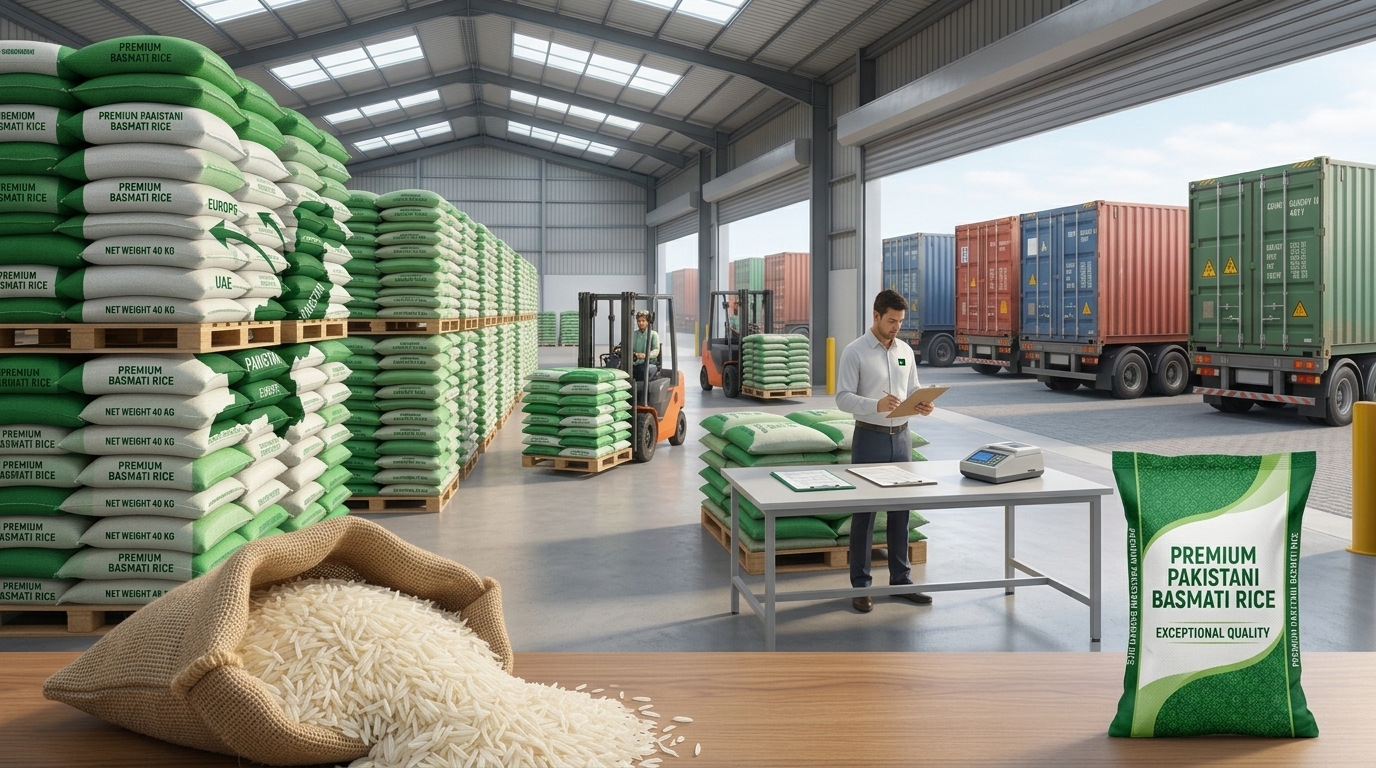
Buyers new to international trade should first read MFTC’s guide on how to export rice from Pakistan, which walks through the full supply process from enquiry to shipment. This article covers what every international buyer should prepare before ordering from a trusted rice exporter in Pakistan, so the paperwork and production start without hold-ups.
Why Buyer Preparation Matters
A cross-border rice export order involves several parties at once, like the exporter, shipping lines, banks, customs offices, and inspection agencies. Incomplete or inaccurate details on the initial paperwork can lead to delays in shipping, documentation errors, and undue costs.
By collecting the right details before confirming an order, MFTC can:
- Recommend the most suitable rice variety.
- Provide an accurate FOB or CIF quotation.
- Prepare export documentation correctly the first time.
- Schedule production and packing efficiently.
- Meet delivery timelines without interruption.
This organized approach benefits both the exporter and the buyer throughout the transaction.
What Buyers Should Provide Before Ordering
Before a commercial offer is prepared, MFTC gathers a set of essential details from every international buyer. The table below summarises what to have ready; the sections that follow explain each one.
Company Information
Establishing clear business communication starts with knowing who we’re dealing with. For a first-time order, buyers should provide
- a registered company name
- country of operation
- business address
- a contact person
- an email address
- a phone or WhatsApp number.
A company website helps where one is available. This information lets MFTC open a proper line of communication and prepare export documentation accurately.
Rice Variety and Processing Type
Different markets call for different rice grades and processing methods, so the quotation can only be accurate once the variety is clear. Common export varieties include
- 1121 Basmati Rice
- Super Kernel Basmati Rice
- IRRI Rice
- PK-386 Rice
- Long Grain Non-Basmati Rice
Buyers should also state the processing type they need: white, steam, sella (parboiled), or golden sella. You can review MFTC’s full range of Pakistani rice varieties before finalising the order.
Quantity Requirements
The requested volume shapes pricing, production scheduling, and container planning, so a realistic estimate helps both parties. Buyers should specify
- Quantity in metric tons
- Estimated number of containers
- Trial order or long-term supply
- Delivery frequency if recurring orders are planned
Providing realistic volume estimates allows better planning for both parties.
Packaging Preferences
Packaging requirements change with the destination market, and custom work needs lead time. Buyers should confirm
- the bag size (1, 5, 10, 25, or 50 kg)
- the packaging material
- whether they need private-label or plain bags
- Printing requirements
- pallet requirements.
Confirming this early prevents packaging from holding up dispatch.
Destination Port and Incoterms
The shipping destination determines freight cost and transit time, so it’s needed for any accurate quotation. Buyers should provide the destination country, the port, and their preferred Incoterm: FOB, CIF, CFR, or another where applicable. If you’re new to these terms, the ICC’s Incoterms® rules define each one and who carries responsibility at each stage.
Payment Methods for Rice Export
Secure payment is an essential part of every rice export transaction. Depending on the order and the buyer relationship, MFTC works through internationally accepted methods such as a Letter of Credit (LC), Telegraphic Transfer (TT), or other mutually agreed banking arrangements. Payment terms are settled before production begins, so the process stays transparent for both sides. To understand how pricing, shipping responsibility, and payment fit together in a contract, buyers can read our guide on how rice export contracts work.
Documents Required from International Buyers
Although documentation requirements vary by country and order value, buyers should generally be prepared to provide:
- Company registration details
- Import license (where applicable)
- Tax or VAT registration (if required by local regulations)
- Bank details for international transactions
- Shipping instructions
- Delivery address
Providing complete information early helps prepare export paperwork without delays.
How MFTC Verifies New Buyers
MFTC runs a basic verification on every new customer before confirming an export order, which protects both parties and supports a lasting relationship. Verification may include company identification, business registration checks, confirmation of banking information, and communication through official business channels.
Quality Specifications to Share
Every market has its own quality expectations, and stating them upfront prevents disputes once production has started. Buyers should specify grain length, broken percentage, moisture level, crop year, polish level, purity standards, inspection requirements, and any destination-market regulations.
Labeling Requirements
Many countries enforce mandatory labeling rules, and artwork is a common cause of packaging delay. Where private labeling is required, buyers should send brand artwork, logo files, barcode requirements, language preferences, and any country-specific compliance details. Receiving the artwork before production keeps packaging on schedule.
Communication During the Order
A successful Pakistan rice export order depends on clear, timely communication. Throughout the order, buyers should stay reachable to approve packaging designs, confirm documentation, review the proforma invoice, verify shipping instructions, and sign off on production details before dispatch. Prompt replies keep production and shipping on track.
Building Long-Term Export Relationships
Many international buyers begin with a trial shipment before committing to regular containers. When the product quality, communication, and logistics all hold up, later orders move faster, because the buyer’s information is already verified. Over time, this is how exporters and buyers build reliable supply chains with consistent quality and predictable delivery.
Why Choose MFTC for Rice Export from Pakistan
MFTC is an experienced rice exporter focused on delivering export-quality Pakistani rice with transparent communication and professional documentation. Because we gather complete buyer information before production, we reduce delays and make sure each shipment meets the agreed terms. Sharing full order specifications from the outset is what keeps the process smooth, whether you’re sourcing premium basmati or non-basmati rice.
Ready to Start Your Rice Export Order?
Whether you’re a first-time buyer or an experienced rice trader, MFTC’s export team can help you choose the right product, packaging, documentation, payment terms, and shipping plan. To discuss your requirements or request a custom quotation, contact MFTC today.
FAQs
1. What documents do buyers need before placing a rice export order?
A: The minimum order quantity varies in terms of the type of rice you order, the packing needs, and the shipment’s destination. Purchasing the correct quantity should be discussed at the outset of the enquiry so the appropriate export solution can be provided.
2. Does MFTC require a minimum order quantity for rice exports?
A: Minimum order quantities depend on the selected rice variety, packaging requirements, and shipping destination. Buyers should discuss their required quantity during the initial inquiry so the most suitable export solution can be offered.
3. What payment terms does MFTC accept from international buyers?
A: For orders and the relationship between order and buyer, MFTC accepts orders through international payment methods such as Letter of Credit (LC) and other mutually agreed banking methods.
4. How does MFTC verify a new buyer before starting an export order?
A: New buyers undergo a standard verification process that may include company registration checks, business identification, banking information verification, and communication through official company channels before the order proceeds.
5. What information should buyers provide about required rice variety and packaging?
A: Buyers have to define rice variety, rice processing (White, Steam or Sella), rice amount, broken percentage, moisture content, bag size, packaging material, labeling, or other special instructions about shipping. All these details are crucial for ensuring proper price quotations and speeding up orders.