
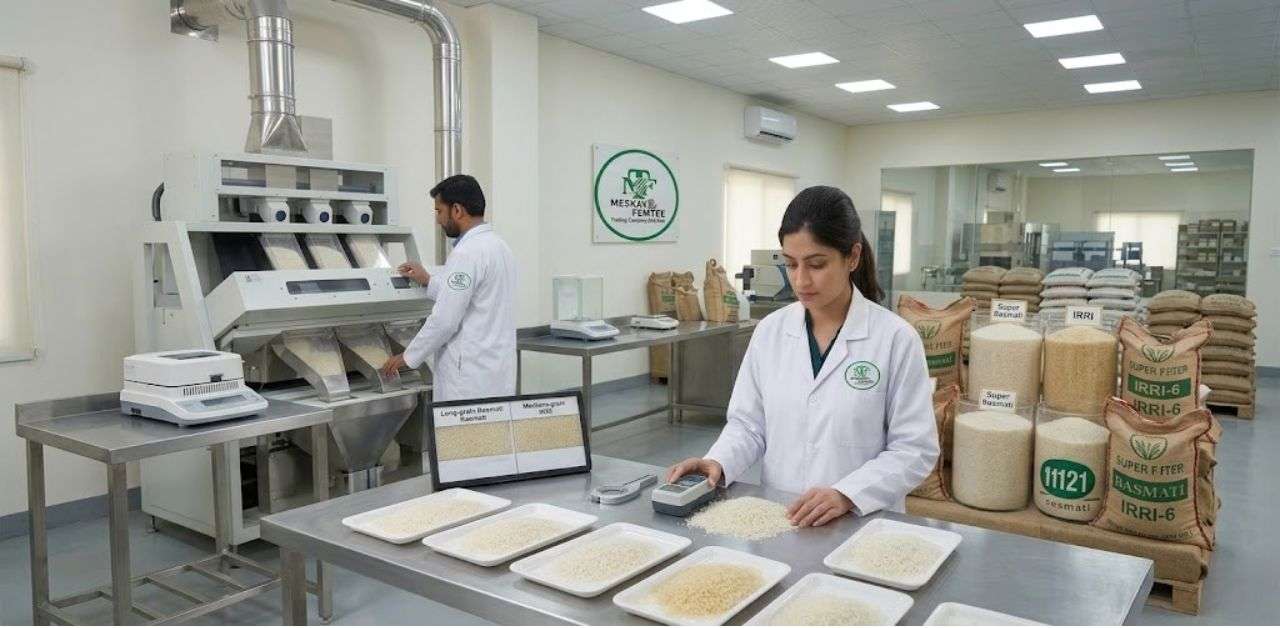
Before a single bag is filled, every batch of rice has to be sorted into what it actually is: its variety, its grade, and its purity. Packaging rice that hasn’t been properly classified is how buyers end up with mixed grades, rejected containers, and broken trust. This article explains the standards MFTC uses to classify rice, how the process works, and why it happens before packaging rather than after.
What Rice Classification Is and Why It Comes First
Rice classification is the sorting of rice into defined grades based on measurable characteristics, variety, grain length, moisture, broken percentage, and purity. It is the step that determines exactly what goes into each package.
Classification has to come before packaging for a simple reason: once rice is bagged, its grade is fixed. If two grades are mixed before packing, the entire batch is compromised, and the buyer receives an inconsistent product. Classifying first ensures that every bag in a shipment contains rice of one variety and one grade, which is the entire basis of a reliable export. This is why, for a serious rice exporter in Pakistan, classification is not a formality but the foundation of quality.
The Standards MFTC Uses to Grade Rice
Rice grading at MFTC is based on specific, measurable standards rather than visual judgment alone. Each batch is assessed against the criteria that international markets require, and the key measures are set out below.
| Standard | Requirement for Premium Export Grade |
|---|---|
| Grain length | Minimum 6.61 mm for premium Basmati (APEDA standard). General long-grain minimum is 6.0 mm. |
| Moisture content | Maximum 14% (industry standard for safe storage/transit). Codex Alimentarius permits up to 15%. |
| Broken grains | Maximum 5% for top export grades. |
| Non-Basmati admixture | Maximum 7% for authentic Basmati (EU/UK Code of Practice). |
| Aroma (2-AP) | ~0.04–0.09 ppm (natural compound; ~10× higher than non-aromatic rice). |
| Purity | Free from artificial colouring, additives, and polishing agents. |
These are the same benchmarks that determine whether a shipment clears customs in strict markets like the EU and UK. Grain length sets the grade, moisture protects the rice through ocean freight, and the broken percentage determines the commercial yield a buyer receives. Our full approach to these measures is detailed in our guide to rice purity and Basmati export standards.
The Rice Varieties MFTC Classifies
Different rice varieties serve different markets, and classification begins with correctly identifying the variety itself. MFTC classifies and supplies the full range of Pakistani export rice, broadly falling into two families.
Basmati varieties are long-grain, aromatic rice grown in Pakistan’s Punjab region, prized for grain elongation and natural fragrance. These include 1121 Basmati, Super Kernel Basmati, and 1509 Basmati. Non-Basmati varieties such as IRRI-6 and PK-386 are valued for consistency, yield, and affordability across high-volume markets. The distinction between them is explained further in our breakdown of 1121, 1509, and IRRI rice varieties. Correctly separating these before packaging is what prevents the single most common problem in the rice trade: a premium variety diluted with a cheaper one.
How MFTC Classifies Rice Before Packaging
Classification at MFTC follows a controlled sequence, with each stage confirming the grade before the rice moves toward packaging:
- Variety identification: confirming the rice is a genuine, single variety, free from blending with cheaper grades.
- Physical inspection: measuring grain length, counting broken grains, and checking colour uniformity and foreign matter.
- Aroma assessment: evaluating the natural aroma that distinguishes authentic Basmati from non-aromatic varieties.
- Moisture testing: confirming the batch sits within the 12–14% range required for safe storage and shipping.
- Laboratory analysis: deeper testing for purity and safety, with third-party certification where required.
- Grade confirmation: assigning the final grade, after which the batch proceeds to sealed, export-compliant packaging.
Because MFTC controls this sequence in-house, from farm-sourced grain through milling to the final grade, the rice in each package is verified rather than assumed. Our complete quality process for large orders is covered in our guide to rice quality control for bulk orders.
Why Classification Matters to International Buyers
For an international buyer, correct classification is the difference between an order that arrives as specified and one that is rejected at port. Buyers purchase against a written specification, and classification is what guarantees the delivered rice meets it.
The stakes are real. In strict markets, a shipment that fails a purity check is not a minor issue; it can mean total rejection of the container and significant financial loss. Consistent, certifiable classification is what protects the buyer from that outcome and what allows a supplier to be trusted order after order. MFTC operates in full compliance with destination-market standards and as a member of the Rice Exporters Association of Pakistan (REAP), with documentation made available to buyers on request.
What Buyers Should Specify When Ordering
To receive rice classified to their exact needs, buyers should state their requirements clearly at the enquiry stage. The details that matter most are:
- The rice variety required (for example, 1121 Basmati, Super Kernel, or IRRI-6)
- The maximum broken percentage acceptable for the intended use
- The maximum moisture level, particularly for long transit routes
- Any purity or admixture tolerances, written into the contract
- Destination-market requirements, such as DNA certification for EU or UK orders
Providing these upfront allows MFTC to classify and supply rice that matches the specification precisely, and to include the right documentation from the start. Buyers can discuss their requirements directly with our team through our contact page.
Order Correctly Classified Rice From MFTC
Proper classification before packaging is what turns a rice order into a shipment a buyer can rely on: one variety, one grade, fully documented, and matched to specification. With two decades of export experience across more than 150 destinations, and one million tons processed annually, MFTC classifies every batch to the standard international markets demand.
To order rice classified to your exact specification, or to request compliance documentation, contact MFTC today.
FAQs
1. How does MFTC classify rice types before packaging?
A: MFTC classifies rice by confirming its variety, then measuring grain length, broken percentage, moisture, and purity before assigning a final grade then it is sealed and shipped.
2. What quality standards are used to grade Basmati vs IRRI rice?
A: Basmati is graded on grain length (minimum 6.61mm), natural aroma, elongation, and low admixture, reflecting its premium status. IRRI and other non-Basmati varieties are graded primarily on consistency, moisture, and broken percentage for high-volume, value-focused markets.
3. What role do grain length and purity play in classification?
A: Grain length sets the grade. Longer grains command premium classification, while purity ensures the rice is a genuine single variety, free from cheaper blends, colouring, or polishing agents. Together, they determine both the grade and the price a buyer pays.
4. How does MFTC ensure consistency across every packaged batch?
A: Because MFTC controls classification in-house from farm-sourced grain through milling and testing, each batch is verified against fixed standards before packing. Processing one million tons annually with documented quality checks is what maintains consistency shipment after shipment.
5. Why is rice classification important for international buyers?
A: Buyers order with a written specification, and correct classification guarantees the delivered rice matches it. In strict markets, an incorrectly classified batch can be rejected at port, so certifiable classification protects the buyer from loss and builds a reliable long-term supply.