
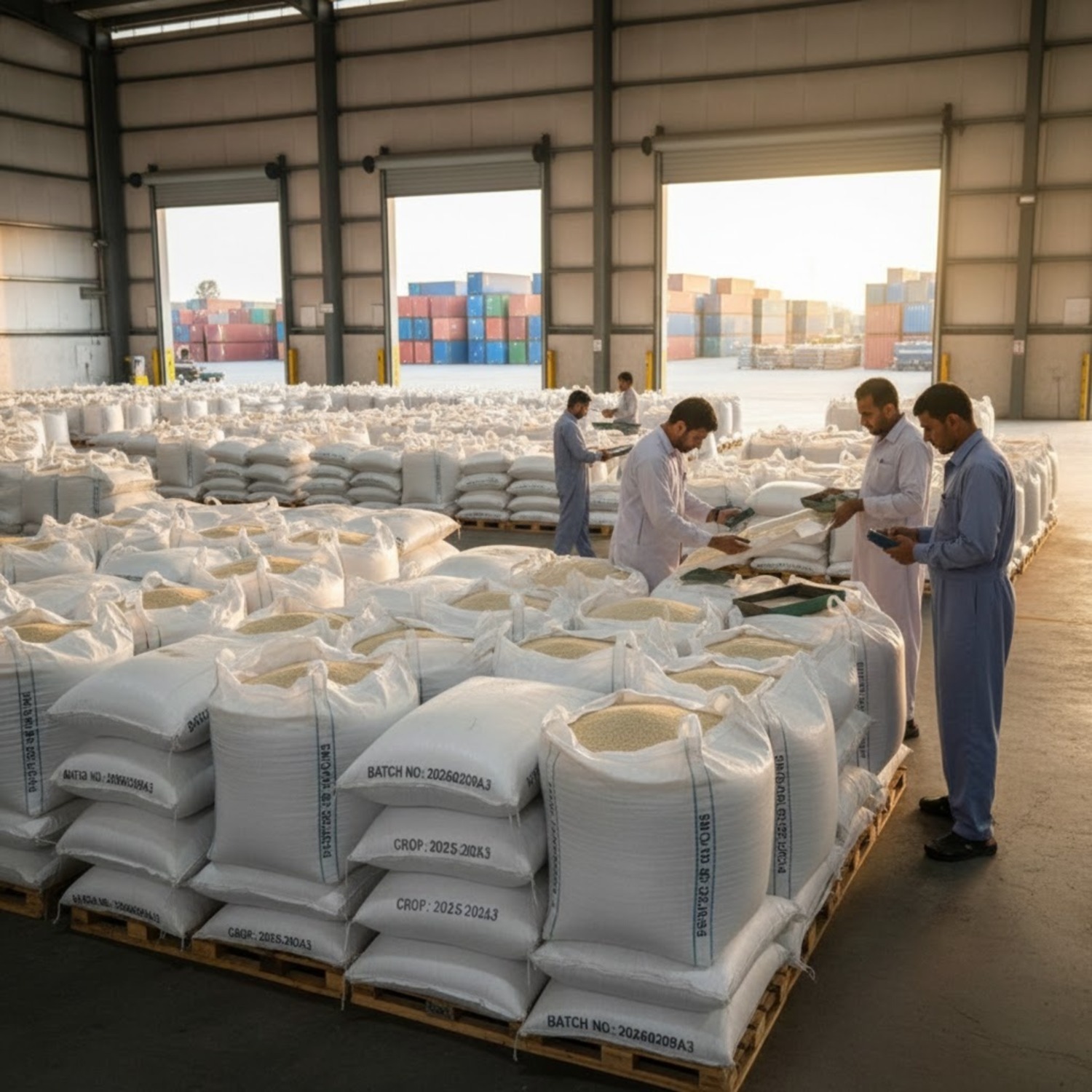
In the world of rice exports, your reputation is only as good as your last shipment. But as global food safety standards get tighter, a “good reputation” isn’t enough anymore. Buyers in the EU, USA, and the Middle East now demand proof.
They want to know: Where was this grown? Which mill processed it? And if there’s a problem, how fast can you find the source?
This is where rice export traceability and batch tracking move from being “nice-to-have” features to essential survival tools for your business. At MFTC, we don’t just move rice; we manage the data that gives our partners peace of mind.
What is Rice Export Traceability?
At its core, traceability is the ability to follow the “footprint” of rice through every stage of the rice supply chain. It’s the digital or physical trail that connects a 5kg bag on a supermarket shelf in London back to a specific acre of land in Punjab or Sindh.
The Two Directions of Tracking:
- Downstream (Forward): Tracking a specific batch from the mill to the shipping container and eventually to the customer. This is vital for managing recalls.
- Upstream (Backward): Tracing a finished product back to the specific farmer, the seeds used, and even the date of harvest.
Why Batch Tracking is the Secret to Profitable Exports
A “batch” (or lot) is a group of products that share the same characteristics, usually processed at the same time on the same line. Batch tracking involves assigning a unique ID to these groups.
1. Rapid Recall Management
Imagine a buyer reports a high level of pesticide residue in one bag. Without batch tracking, you might have to recall your entire shipment (thousands of tons). With a robust system, you can identify that only “Batch #RICE-102” was affected. You isolate 20 tons instead of 2,000. That is the difference between a minor hiccup and a bankruptcy-level event.
2. Meeting Global Regulatory Deadlines (The 2026/2028 Shift)
The rules are changing fast.
- EU General Food Law: Already requires “one-step-back, one-step-forward” tracking.
- US FDA FSMA Rule 204: New, stricter requirements for “Additional Traceability Records” are coming into play. While some deadlines have been extended to 2028, most high-end buyers are demanding compliance by 2026 to stay ahead of the curve.
What Most Miss
Generic information tells you that “traceability is good.” But they rarely talk about the real-world friction in the Pakistani rice industry. Here are the three things your competitors aren’t telling you:
A. The “Mandi” Mixing Problem
In Pakistan, rice often moves from small farms to middlemen (Arthis) and then to the Mandi. By the time it reaches the mill, rice from ten different farms is mixed.
The Solution: True traceability starts with Direct Procurement. At MFTC, we bridge this gap by working closer to the source, ensuring that batch integrity isn’t lost at the very first step.
B. Moisture & Aflatoxin Correlation
Most people see batch tracking as a “paperwork” task. In reality, it’s a quality tool. If a specific batch shows high moisture or aflatoxin levels, tracking allows you to identify if the issue happened during paddy drying or while waiting at the port in a bulk shipment.
C. The Cost of “Manual” Gaps
Many exporters still use paper logs. If an auditor from the EU asks for a “Trace-Back” report, a manual system takes days. A digital batch system takes minutes. In a world of 24-hour recall windows, paper is a massive liability.
How MFTC Secures the Rice Supply Chain
We understand that rice exports from Pakistan need to be competitive on more than just price. We implement a “Critical Tracking Event” (CTE) approach:
- Paddy Intake: Every truckload is logged with origin data.
- Milling & Processing: Unique Batch IDs are assigned during the husking and polishing phases.
- Warehousing: Digital inventory ensures “First-In, First-Out” (FIFO) rotation to maintain freshness.
- Shipping: Batch numbers are linked to Container or Bulk Loading documents for end-to-end visibility.
The Bottom Line
In the modern rice supply chain, transparency is your best sales tool. By investing in rice export traceability, you aren’t just following the law, you’re telling your buyer that you have nothing to hide and everything to prove.
Want to ensure your next shipment is fully traceable? Explore how we handle secure, tracked logistics at Meskay & Femtee. We don’t just ship rice; we ship trust.
FAQ
1. Is traceability too expensive for small exporters?
Think of it like insurance. The cost of a digital tracking system is small compared to the cost of a rejected 500-ton shipment. You can start small with organized batch coding before moving to full blockchain or IoT solutions.
2. Does traceability actually help me sell more rice?
Yes! High-end retailers (like Carrefour or Walmart) won’t even talk to suppliers who can’t prove their traceability. It’s a “ticket to play” in premium markets.
3. What’s the difference between a Batch and a Lot?
In the rice industry, they are often used interchangeably. Generally, a Batch refers to rice processed at the same time, while a Lot might refer to a specific quantity designated for one customer order. Both need unique IDs.
Leave a Reply