
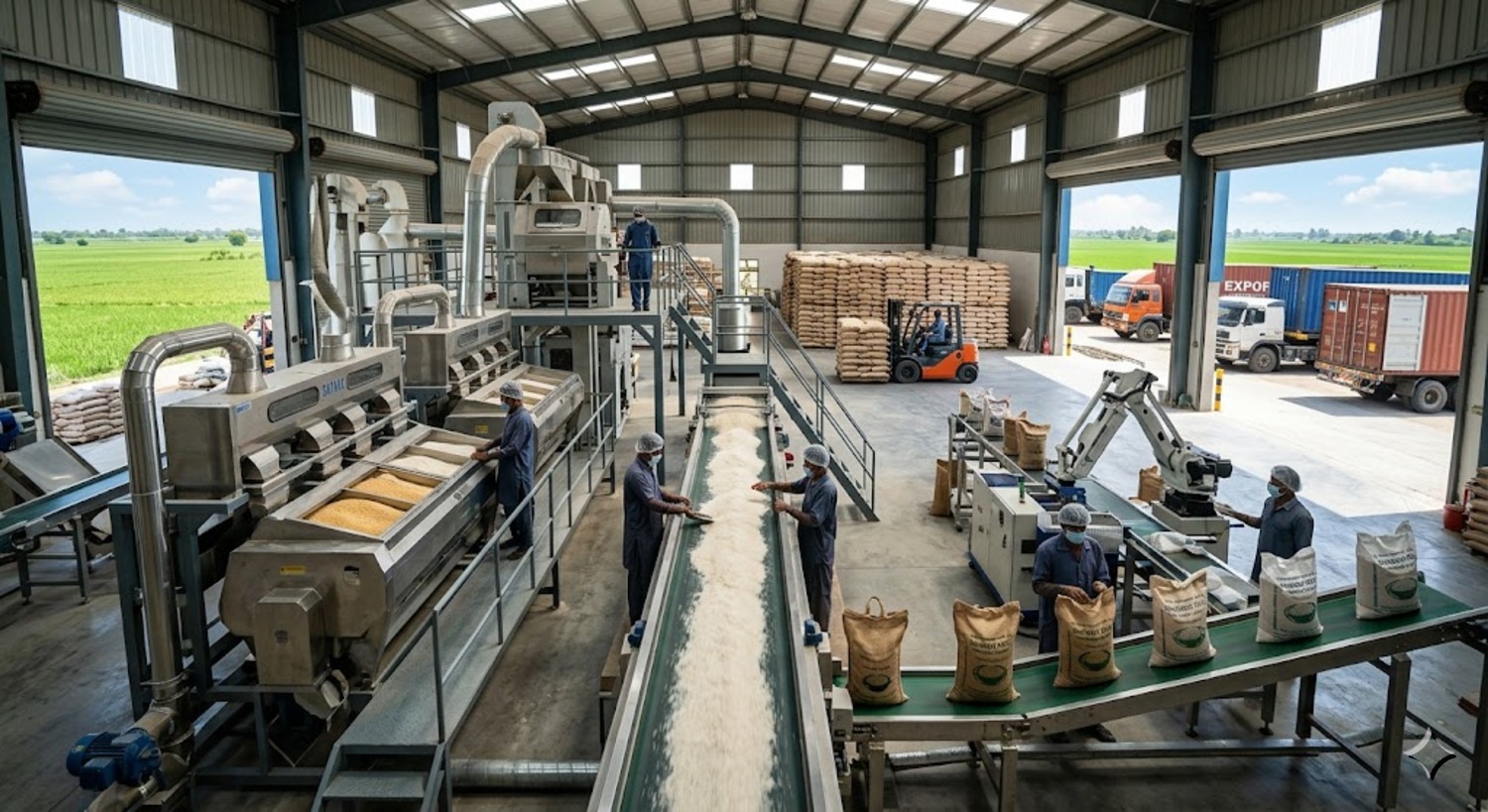
Rice mills in Pakistan contribute significantly to Pakistan’s agricultural sector, utilizing millions of farmers and laborers. Pakistan is a key producer of top-grade Basmati and competitive Non-Basmati rice, thus contributing to its exports. The industry has evolved into advanced systems, with Meskay & Femtee Trading Company reflecting progress and quality in modern rice processing.
Why Pakistan’s Rice Milling Industry Matters
Rice in Pakistan is one of the leading export crops along with textile exports, making the rice industry in Pakistan highly valuable.
- Brings valuable foreign exchange to Pakistan.
- Supports both rural and urban economies.
- Exports rice to the Middle East, Africa, and Europe.
- Enhances Pakistan’s global rice export competitiveness.
Considering the unique smell and texture, along with international demand for basmati rice, it will be the most profitable among all others within the export business market.
How Many Rice Mills Operate in Pakistan?
There are various rice mills in Pakistan, varying in size from small-scale, localized to large-scale plants producing rice for exports through their processing plants.
Punjab is the leading province in Basmati rice production, whereas Sindh excels in Non-Basmati rice production. Rice mills in Pakistan are constantly evolving, employing new equipment and technology in compliance with international hygiene and export norms.
Basmati vs Non-Basmati: What Pakistan’s Mills Produce
Pakistan’s rice industry is mainly divided into two export categories:
Basmati rice dominates in value, while Non-Basmati rice leads in export volume, both of which are vital for the sustained rice export from Pakistan.
Pakistan Rice Export: Numbers That Tell the Story
Pakistan Rice Export performance remains strong despite global competition.
Pakistani rice is competing with India, Vietnam, Thailand, and the USA in the global market.
Key Rice-Growing & Milling Regions in Pakistan
Pakistan’s rice mill location is crucial for its growth.
- Punjab: Gujranwala is a key Basmati rice grower in Punjab. As the quality of rice grown here is better than that of other types, most of the rice from this region is exported.
- Sindh: This region is known for non-basmati rice production. Its closeness to the Karachi Port helps in making rice milling and export easier.
- Balochistan and KPK: Both regions also contribute to Pakistan’s rice industry through local rice cultivation. With the adoption of improved agricultural practices and technology, production in these areas is gradually increasing.
Rice Processing in Pakistan: From Paddy to Export
The process of getting rice from the farm to the shipping container is very thorough in Pakistan. A good rice mill in Pakistan focuses on:
- Cleaning & Destoning: Getting rid of dirt and rocks from the field.
- Husking: Removing the outer layer.
- Whitening: Carefully taking off the outer layer of the grain.
- Colour Sorting: Taking out colored grains to make sure they are pure.
- Grading & Packing: Ensuring that all rice meets the requirements needed for international shipping from Pakistan and supports rice export from Pakistan.
Challenges Facing Pakistan’s Rice Mill Sector
The rice industry in Pakistan has tough challenges to deal with.
- Energy Costs: Changing electricity and gas prices continue to worry businesses about their profits.
- Global Competition: The low prices in India and Vietnam make our mills focus on being highly efficient.
- Quality Compliance: Following strict European rules regarding maximum allowed chemical levels is essential in rice processing in Pakistan.
- Climate Risks: Uncertain rainy seasons need improved farming and storage methods.
These things directly impact rice exports in Pakistan.
Growth Outlook: What’s Next for the Rice Industry in Pakistan
The outlook for rice farming in Pakistan is good and supports the country’s rice industry.
- Global rice demand continues to grow.
- China and Africa are expanding import markets.
- Government export incentives support competitiveness.
- Investment in modern rice mill equipment is increasing.
- High-quality rice is becoming more valuable around the world.
Pakistan may be able to expand its exports of rice not only in volume but also in terms of value through improved rice processing in Pakistan.
Conclusion
Meskay & Femtee Trading Company may help Pakistan keep pace with the growing global demand for its rice. With the development of technology and international market demands, the rice milling industry may advance further and play a significant role in exporting rice across the globe.
MFTC delivers superior, export-grade Pakistani rice through advanced milling technology and unmatched quality.
FAQs
1. How many rice mills are in Pakistan?
A: Pakistan has approximately 1,000 to 1,500 rice mills operating nationwide.
2. What are the top rice mills in Pakistan?
A: Top mills include large export-oriented industrial rice mills in the Punjab and Sindh regions.
3. What is the rice industry in Pakistan?
A: It is a major agricultural sector supporting exports, farmers, and food processing nationwide.
4. How does rice processing work in Pakistan?
A: It involves cleaning, husking, whitening, sorting, grading, and packaging paddy into export-ready rice.
5. Which rice mill is best in Pakistan?
A: Export-grade automated rice mills with modern machinery are considered the best in Pakistan.
Leave a Reply