
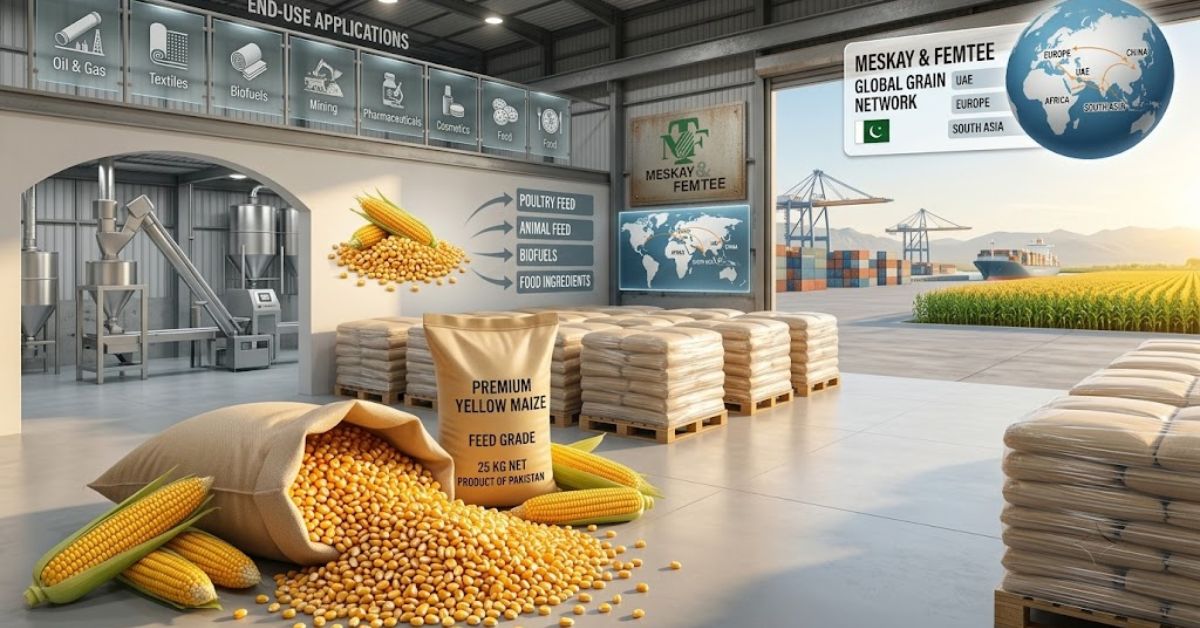
What is Yellow Maize and Why is it Used in Feed?
Yellow maize, also known as corn maize, is a golden cereal grain and the backbone of animal feed used globally.
The type used for feed is usually dent corn, the most widely grown maize, and the one the feed industry relies on. Maize grain is a major feed grain and a standard component of livestock diets where it is used as a source of energy. It’s prized for its energy and starch, plus natural yellow pigments that enrich poultry skin and egg-yolk colour. That combination is exactly why people just call it “feed corn.” But its role in feed goes deeper than energy alone.
Why Yellow Maize Matters for Animal Feed
For feed manufacturers, maize isn’t a filler to bulk out a ration, it’s the energy core the whole formulation is built around:
- High digestible energy that supports growth and productivity
- Natural pigmentation for richer yolk and skin colour
- Good palatability, so animals actually eat well
- Consistent starch for reliable feed formulation
In fact, maize is the reference against which other grains are measured. The energy value of maize is commonly used as a standard with which other energy sources are compared. If the relative energy value of maize is taken as 100, the energy value of other grain sources is generally lower. This means the quality of your feed corn directly shapes the quality of the feed. And that quality starts with knowing what’s actually in the grain.
The Nutritional Profile Buyers Actually Check
Feed formulators don’t buy on looks, they buy on numbers. Here’s the honest picture of what yellow maize brings, and what it doesn’t:
Maize is an energy powerhouse but a modest protein source. The crude protein content of maize is relatively low, ranging from 8–11%, and it’s deficient in several of the essential amino acids, especially lysine and tryptophan. That’s not a flaw so much as a fact to formulate around, maize supplies the energy, and a protein source (like soybean meal) fills the amino-acid gap.
One genuine edge yellow maize has over white: yellow maize has a higher vitamin A content than white maize, which matters for poultry. It’s also high in carbohydrates (starch), moderate in protein, and low in fiber, making it an excellent energy source for livestock.
So the takeaway for buyers: brilliant energy, reliable starch, but always paired with a protein source in a balanced ration. Which naturally raises the question, how does it stack up against the alternatives?
Yellow Maize vs Other Feed Grains
Maize isn’t the only feed grain, but it’s usually the benchmark. Against sorghum, the most common substitute: when good quality protein is fed, sorghum has a feeding value equal to maize; however, with poor quality protein, the value of sorghum grain is only about 70% that of maize. Sorghum can also carry tannins that lower digestibility, whereas maize is clean and highly palatable.
In short, maize gives you the most dependable energy, the best palatability, and that yolk-colouring bonus, which is why most poultry rations lean on it as the base grain. Other grains have their place, but maize is the one they’re compared to. So where does a buyer find it reliably? For a lot of the world, Pakistan is a strong answer.
Maize in Pakistan: A Reliable Sourcing Base
Pakistan is a strong maize-growing country. The crop is grown widely, especially across Punjab, and harvested in two main seasons, which give a fairly steady supply through much of the year, part of the broader shift toward modern farming solutions across Pakistan’s agriculture sector.
That local abundance makes the maize crop in Pakistan a practical, competitive base for sourcing feed corn as long as the grain is selected and handled to the right standards. Because abundance on its own doesn’t guarantee quality. And that handling is where sourcing really begins.
How We Source Feed Corn: From Farm to Shipment
This is the part most suppliers gloss over, so here’s how it actually works, step by step:
- Selecting the crop: sourcing from maize-growing regions and trusted farmers who follow sustainable farming practices.
- Inspection at intake: checking grain for moisture and quality before it moves anywhere.
- Cleaning and grading: removing impurities and sorting for consistency.
- Storage: proper conditions to prevent spoilage and contamination.
- Shipment: quality-checked, documented, and ready for delivery or export.
Each step protects the one thing feed buyers care about most: consistent, safe grain, batch after batch. And running through every step is one thing.
The Quality Standards That Matter
Feed corn quality isn’t a vague promise; it comes down to a handful of measurable things, closely aligned with the wider food quality and food safety standards followed across Pakistan. These are the industry benchmarks a serious buyer checks, and typical feed-grade targets look like this:
| Standard | Typical Feed-Grade Target | Why It Matters |
|---|---|---|
| Moisture | 13–14% max | Too high risks of mould and spoilage in storage |
| Aflatoxin | 20 ppb max (FDA safe level for feed) | Toxins from mould are a serious animal-health risk |
| Crude protein | ~8–11% | Sets the energy-to-protein balance in the ration |
| Foreign matter | ~2% max | Clean grain means consistent, safe feed |
| Broken/damaged kernels | ~3% max | Affects storage life and quality |
| Test weight | Higher = denser, more energy | Indicates grain density and feeding value |
On aflatoxin specifically, the line is well defined: corn containing less than 20 parts per billion aflatoxin is considered safe by the U.S. FDA for use in all animal feed. Reputable suppliers test against these quality standards and share the results.
Honestly, if a supplier can’t show you moisture and aflatoxin figures, treat that as a red flag. And meeting these, every shipment, depends heavily on one thing: most buyers underestimate storage.
Storage, Moisture, and Aflatoxin: The Hidden Risk
Here’s the risk that catches buyers out: maize can leave the field clean and still go bad in storage. Aflatoxin is considered to be primarily a storage mycotoxin, meaning poor handling after harvest is often where contamination creeps in.
The culprit is almost always moisture and warmth. Aflatoxins are produced by Aspergillus flavus, which invades maize when drought or earworm stresses occur, and warm, humid conditions let mold take hold. In a climate like Pakistan’s, that makes proper drying and dry, ventilated storage non-negotiable. It’s the difference between grain that stays within the 20 ppb line and grain that quietly drifts past it. This is exactly why sourcing through a managed supply chain, rather than the open market, protects you, and it’s a principle we carry all the way through with our farm-to-table quality certification approach. Which brings us to our role.
Our Role: MFTC’s Feed Corn Supply Chain
This is where our supply chain comes in. As a feed corn sourcer / exporter, MFTC sources yellow maize across Pakistan and manages it through every step, selection, cleaning, grading, storage, and quality control, to supply feed manufacturers and importers with dependable feed corn.
In other words, we don’t just deal with grain; we stand behind its consistency, right down to the moisture and aflatoxin figures on the shipment. Tell us your requirements, and we’ll help you secure a supply you can count on.
Final Words
Reliable feed starts with good-quality yellow maize. MFTC sources and supplies quality-controlled yellow maize and feed corn from Pakistan for feed manufacturers and importers who need consistency they can count on.
FAQs
What is yellow maize used for?
Yellow maize is used mainly in animal feed, thanks to its high energy and natural pigments. It’s also used in food products, starch, and corn oil, but animal feed remains its single biggest use worldwide.
Why is yellow maize important for animal feed?
Because it’s the energy core of most feed rations. Yellow maize provides high digestible energy, valuable starch, natural pigmentation for yolk and skin colour, and good palatability, making it the benchmark grain for poultry and livestock feed.
How is corn sourced?
Feed corn is sourced through crop selection from maize-growing regions, inspection for moisture and quality, cleaning and grading to remove impurities, proper storage, and finally, quality-checked shipment. Each step protects the grain’s consistency and safety.
What quality standards apply to feed corn?
The key standards are moisture level, aflatoxin limits, purity or foreign-matter content, grain grading, and test weight. Reputable suppliers test against these and share results, giving feed buyers confidence in the grain’s safety and value.
Why does storage matter so much for feed corn?
Aflatoxin is largely a storage problem; clean grain can still spoil if kept warm or damp. Proper drying and dry, ventilated storage keep contamination below safe limits, which is why a managed supply chain is safer than open-market buying.