
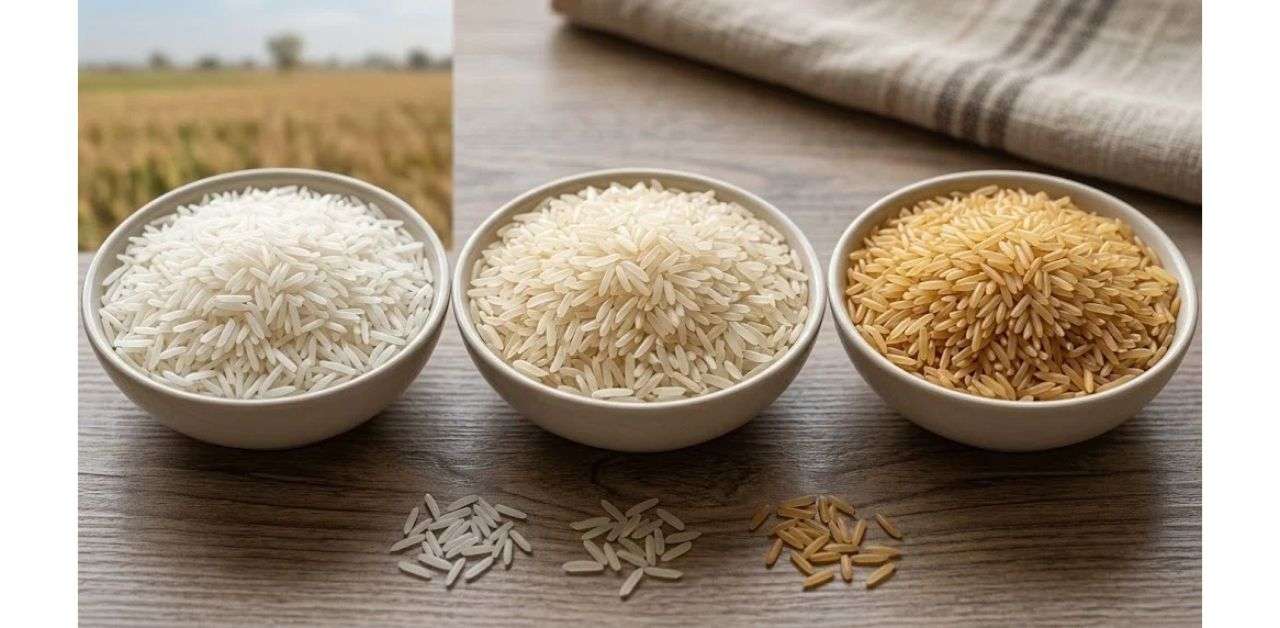
Inexperienced international buyers are more likely to face confusion when buying rice from Pakistan due to the variety of rice, such as Sella, Steam, and Golden Sella. This labeling appears on quotations and on packaging as though they are rice’s various types, but they actually refer to the way the rice is processed. It is crucial to understand the difference, as selecting the wrong type of rice can impact the range of shelf life, cooking performance, and consumer approval. This guide will tell you what each of these Pakistani rice varieties is and which one is best for you.
Addressing a Common Misunderstanding First
The first thing to comprehend is that Sella, Steam, and Golden Sella refer to the processing method, not the variety of rice. These are not types of rice or even varieties of rice. They are rice labels at different stages of processing. In the same way as other rice varieties in Pakistan, the same variety of rice (1121 or 1509 Basmati) is sold based on the rice processing methodology, either as Sella, Steam, or Golden Sella.
This difference is significant commercially. The buyer’s request for “Golden Sella” means he is asking for and specifying a process, not a different grain. This does not change the length, aroma, or grade of the grain, as that will be determined by the rice variety. Getting this right avoids costly misunderstandings in contracts and specifications. With that cleared up, here is what each term means.
What Is Sella Rice?
Sella rice is also known as parboiled rice. The word “Sella” is used to describe a process used during the production of paddy that involves immersing the unripe rice in water, lightly steaming or boiling under carefully controlled conditions, and afterwards drying it without the husk being removed prior to milling. This treatment is done prior to the grain’s polishing.
The grain undergoes some changes that serve the user. This processes the nutrients of the bran to the centre of the grain, hardens the grain to reduce breakage, and provides a significant shelf life. As a result, the grains of Sella are firm and non sticky and retain their shape and length after cooking, making it a popular choice for biryani, pulao, and mass catering.
What Is Steam Rice?
Steam rice is produced by passing steam through the paddy, without the soaking and boiling stages of parboiling. Because it is steamed rather than parboiled, the grain retains a clean, largely white appearance closer to raw rice.
The steamed rice is intermediate in properties between raw and Sella rice. It is much firmer and durable than raw rice, but softer and more aromatic than Sella, with a more balanced and not so strong of a scent. It keeps its grains separate and elongated even after cooking, which makes it ideal for use in restaurants, biryani, and even top quality consumption, since it looks and smells good.
What Is Golden Sella Rice?
Golden Sella rice is parboiled rice with an extra twist. The paddy is given a longer or higher temperature parboiling process, which facilitates the movement of natural pigments into the grain, thus providing the golden amber colour. Importantly, this colour is not a fault, but merely a processing colour.
Golden Sella is the firmest and most robust grain of the 2 above. It has the longest shelf life, is the most resistant to transport and heavy handling, does not break easily during cooking, but it is the least aromatic. Its qualities ensure it is especially appreciated in the commercial and institutional market and in certain export markets where the golden colour is an indication of premium quality.
Sella vs Steam vs Golden Sella: A Comparison
The three processing methods produce distinctly different products. The table below summarises the key differences for buyers.
| Feature | Steam Rice | Sella (White) | Golden Sella |
|---|---|---|---|
| Processing | Steamed only | Parboiled | Intensely parboiled |
| Colour | White | Pale cream/off white | Golden amber |
| Grain firmness | Soft to medium | Firm | Firmest, very hard |
| Aroma | Balanced, fragrant | Mild | Subtle / least aromatic |
| Breakage resistance | Moderate | High | Very high |
| Shelf life | Medium | Long | Longest |
| Best for | Restaurants, daily premium | Biryani, catering, export | Institutional, long transport, export |
In short: Steam offers aroma and appearance, Sella offers durability and cooking performance, and Golden Sella offers maximum shelf life and grain strength.
Which Type Suits Which Export Market?
For an exporter or importer, the right choice depends less on which rice is “best” and more on the destination market’s preferences. This is where many buyers go wrong, and where getting it right protects sales.
- Middle East and Gulf markets typically favour Steam and Sella Basmati for biryani and pulao, where aroma and long, separate grains are valued.
- West African markets, particularly Nigeria, Ghana, and Senegal, strongly prefer Golden Sella, where the golden colour is recognised as a mark of premium, thoroughly parboiled rice and can command a price premium.
- Institutional and catering buyers worldwide often choose Golden Sella or Sella for their durability, consistency, and resistance to breakage in bulk cooking.
- Premium retail and foodservice markets that prioritise fragrance and presentation lean toward Steam rice.
Matching the processing type to the destination is a core part of successful rice export from Pakistan, and it is one of the first things a knowledgeable supplier will discuss with a buyer.
How MFTC Supplies These Rice Types
For buyers seeking a reliable partner across all three processing types, Meskay & Femtee Trading Company (MFTC) offers export-grade Sella, Steam, and Golden Sella rice, processed to consistent, verifiable standards. As one of the established rice suppliers in Pakistan and a trusted exporter, MFTC controls quality from paddy sourcing through processing and packaging.
MFTC supports buyers in the following ways:
- All three processing types, in leading Basmati and non-Basmati varieties, matched to your target market
- Consistent, controlled processing that delivers uniform colour, firmness, and grade in every shipment
- Export-grade packaging and documentation, meeting the purity and quality standards that international markets require
- Guidance on market fit, helping buyers select the right type for their destination and application
Whether your market calls for aromatic Steam rice or durable Golden Sella, MFTC can supply to specification. To discuss your requirements or request samples, contact the MFTC team.
FAQs
1. What is Sella rice and how is it different from regular rice?
A: Sella rice is parboiled, the paddy is soaked, steamed in the husk, and dried before milling. This makes it firmer, less sticky, and longer-lasting than regular (raw) rice, with grains that stay separate when cooked.
2. What does Steam rice mean?
A: Steam rice is processed by passing steam through the paddy without parboiling. It stays largely white, is softer and more aromatic than Sella, and suits restaurant and premium everyday use.
3. What is Golden Sella rice?
A: Golden Sella is intensely parboiled rice with a golden-amber colour caused by processing. It has the firmest grain, the longest shelf life, and high breakage resistance, ideal for catering and long-distance export.
4. What is the difference between Sella and Golden Sella rice?
A: Both are parboiled, but Golden Sella is processed at a higher temperature for longer, giving it a golden colour, harder grain, and longer shelf life. White Sella stays paler and is slightly more aromatic.
5. Which rice type is better for export markets?
A: It depends on the destination. Gulf markets favour Steam and Sella for biryani; West African markets prefer Golden Sella for its colour and durability. The best type is the one that matches your market.
6. Are Sella and Steam rice made from different rice varieties?
A: No. They can be made from the same variety, such as 1121 Basmati. The difference is only in processing: Sella is parboiled, Steam is steamed.
7. How should international buyers choose between Sella, Steam, and Golden Sella rice?
A: By matching the processing type to their destination market’s preference, and confirming grade, variety, and specifications with a supplier who can advise on market fit.