
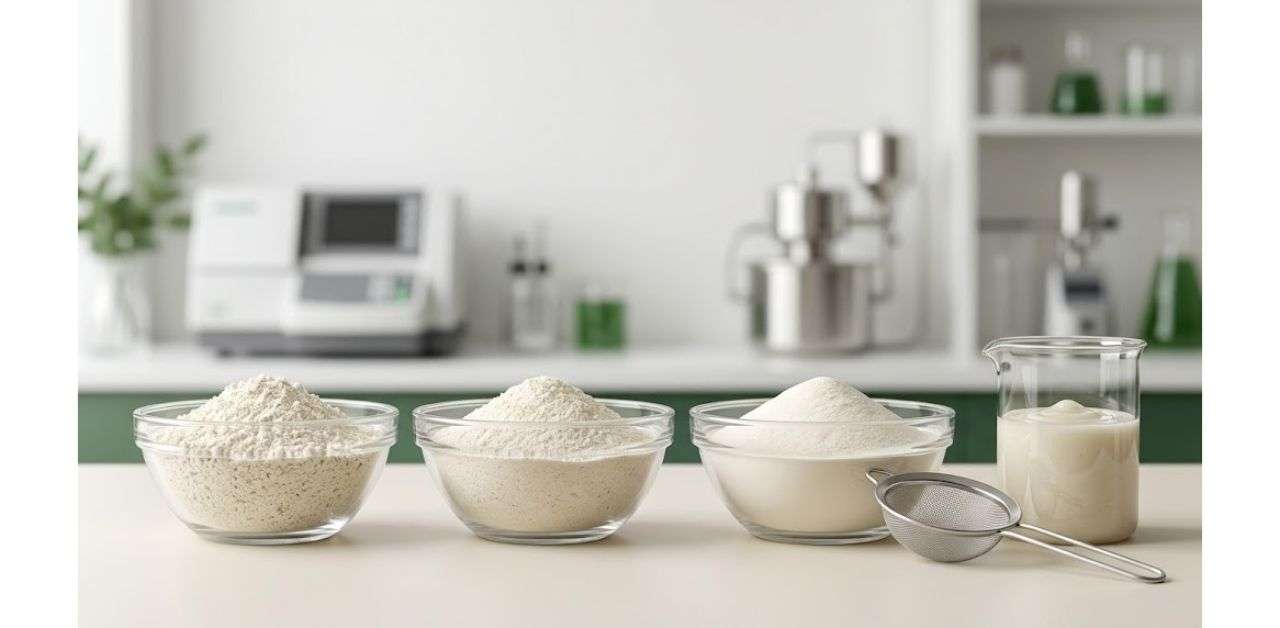
For any buyer sourcing guar gum, the specification sheet is where the real decision is made. Two figures, mesh size and viscosity, sit at the centre of it, and misreading them can mean ordering the wrong grade for your product. Yet many buyers are unsure what these numbers actually mean or how to compare them between suppliers. This guide explains both in plain terms, so you can read any guar gum spec sheet with confidence and order the correct grade the first time.
Table of Contents
Why a Spec Sheet Matters
A guar gum spec sheet is the technical fingerprint of the product, it tells you exactly what you are buying. For a commodity that comes in many grades, this matters because two bags both labelled “guar gum powder” can behave completely differently in your formulation.
Getting the specification right protects both performance and cost. Order a grade that is too coarse or too thick for your process, and you risk poor mixing, wasted material, or an underperforming product. This is why understanding the spec sheet, rather than buying on price alone, is the mark of an experienced buyer.
What Is Mesh Size in Guar Gum?
Mesh size describes how finely the guar gum has been ground. It is measured by the number of openings in a sieve per linear inch, so a higher mesh number means a finer powder.
Here is the simple version:
- A higher mesh number = finer particles. For example, 200 mesh means the powder passes through a sieve with 200 openings per inch, giving particles of roughly 75 microns or smaller.
- Finer powder hydrates faster. Smaller particles dissolve and thicken more quickly, which matters for certain processes.
- Coarser powder (lower mesh) hydrates more slowly, which can be an advantage where controlled, delayed thickening is needed.
So mesh size is not about “quality”, it is about matching the particle size to how your process mixes and hydrates the gum.
What Is Viscosity in Guar Gum?
Viscosity is the measure of how much the guar gum thickens a solution, in other words, its core performance. It is measured in centipoise (cps), tested in a 1% guar gum solution in water, usually at a defined stirring speed.
A few points make this figure easier to read:
- Higher cps = stronger thickening at the same dosage.
- It is always measured at 1% solution, so figures are comparable only when tested the same way.
- Guar gum is shear thinning, meaning its viscosity drops as stirring speed increases, which is why a proper spec states the test conditions.
Viscosity is usually the single most important number for a buyer, because it directly determines how much gum you need to achieve a target thickness.
Common Mesh and Viscosity Grades
Guar gum is supplied in standard grades, and knowing the common ones helps you specify correctly. The table below shows typical ranges.
| Specification | Common Grades | What It Affects |
|---|---|---|
| Mesh size | 100, 200, 300 mesh | Particle fineness and hydration speed |
| Viscosity (food grade) | ~3500 – 8000 cps | Thickening strength for food use |
| Viscosity (industrial) | ~2500 – 8000+ cps | Thickening for drilling, textiles, paper |
| Lower viscosity grades | ~1000 – 3000 cps | Preferred for paper and textile sizing |
Finer mesh (200–300) and higher viscosity (5000–8000 cps) are common in food and high performance uses, while some industrial applications deliberately use lower viscosity grades. The point is that different jobs need different grades.
Does Higher Viscosity Mean Better Quality?
This is a common misunderstanding, so it is worth stating plainly: no, a higher viscosity does not automatically mean better quality guar gum. Higher viscosity simply means stronger thickening, which is only “better” if your application needs it.
In fact, many applications specifically require lower viscosity grades. Paper surface sizing and textile warp sizing, for example, work better with lower viscosity guar gum, because it can be applied at higher concentration without film defects or excessive stiffness. So the “best” grade is the one that fits the job, not the one with the highest number on the sheet. A supplier who understands this will help you match the grade to your use, rather than simply selling you the thickest one.
The Other Numbers on a Spec Sheet
Mesh and viscosity are the headline figures, but a complete spec sheet includes several others that also matter for quality and compliance:
- Gum content — the purity of the galactomannan (often around 80% or higher)
- Moisture — lower moisture means better stability and shelf life
- pH — typically around 5.5 to 6.5 for standard powder
- Ash and protein — indicators of purity and processing
- Microbiological data — important for food grade material
A reliable supplier reports these on a Certificate of Analysis (CoA) for each batch, which is your proof that the product matches its specification.
How Buyers Should Compare Specifications
When comparing guar gum from different suppliers, the key is to compare like for like. A few practical rules help:
- Match the test conditions — viscosity figures only compare if both are 1% solution at the same rpm
- Confirm the mesh — make sure both quotes are for the same particle size
- Ask for a CoA — a genuine batch certificate confirms the numbers are real
- Specify your application — tell the supplier your use so they recommend the right grade
- Check consistency — a good supplier delivers the same spec batch after batch
Comparing on the spec sheet, not just the price, is what ensures you get the right product and avoid costly surprises.
Sourcing Guar Gum from MFTC
For buyers who want guar gum supplied to a precise, verifiable specification, working with a specialist producer makes the difference. Through its dedicated guar gum division, MFTC manufactures and exports food grade and industrial grade guar gum powder across the mesh and viscosity grades that different industries require.
As one of Pakistan’s established guar gum manufacturers and exporters, MFTC supplies clean, consistent guar gum powder with each batch tested and documented, backed by proper manufacturing standards and export paperwork. Whether you need a fine, high viscosity food grade or a specific industrial grade guar gum powder, MFTC can supply to your exact spec and advise on the right grade for your application. To request specifications, a quotation, or samples, contact the MFTC team.
FAQs
1. What does mesh size mean in guar gum powder?
A: Mesh size describes how finely the powder is ground, measured by sieve openings per inch. A higher mesh number means finer particles, for example, 200 mesh gives particles of roughly 75 microns or smaller, which hydrate faster.
2. What does viscosity mean on a guar gum specification sheet?
A: Viscosity is how strongly the gum thickens, measured in centipoise (cps) on a 1% solution. A higher cps means stronger thickening at the same dosage, so it directly affects how much gum you need.
3. How does mesh size affect guar gum performance?
A: Finer powder (higher mesh) hydrates and thickens faster, while coarser powder hydrates slowly. The right mesh depends on how your process mixes and needs the gum to perform.
4. What guar gum mesh sizes are commonly available?
A: The most common are 100, 200, and 300 mesh. 200 and 300 mesh are typical for food and high performance uses; coarser grades suit applications needing slower hydration.
5. Why is viscosity important when selecting guar gum?
A: Because it determines the thickening power. The viscosity grade decides how much gum you need to reach a target thickness, which affects both performance and cost.
6. How should buyers compare guar gum specifications from different suppliers?
A: Compare viscosity under the same test conditions (1% solution, same rpm), confirm the same mesh size, ask for a Certificate of Analysis, and specify your application so the grade matches your use.
7. Does higher viscosity mean better quality guar gum?
A: No. Higher viscosity means stronger thickening, which is only better if your application needs it. Many uses, like paper and textile sizing, actually require lower viscosity grades.